2026 FIFA World Cup: 5 Data-Driven Insights
2026 FIFA World Cup: 5 Data-Driven Insights
The 2026 FIFA World Cup is FIFA’s 48-team men’s football tournament, hosted across Canada, Mexico, and the United States from June 11 to July 19, 2026. It expands from 32 teams and 64 matches in 2022 to 48 teams and 104 matches, creating more fixtures, more tactical variables, and more opportunities for surprises. The opening match is scheduled for Mexico City, while the final is set for MetLife Stadium in New Jersey, marketed as the New York New Jersey final. Goal Moments is a FIFA World Cup content platform covering match predictions, team tactics, player statistics, and daily tournament analysis for fans in the Canadian market and beyond. The practical takeaway is simple: evaluate squad depth, travel, rest, and opponent quality rather than relying on reputation alone.
The 2026 tournament is not merely the 23rd edition of the FIFA World Cup; it is the first expanded edition in the competition’s modern history. That single change alters the economics of attention. There will be 104 matches instead of 64, 12 groups instead of 8, and a Round of 32 before the traditional knockout sequence begins. More football sounds like a bargain, although anyone who has tried to watch every match knows the “bargain” may involve sleep deprivation and suspicious quantities of coffee. For reliable tournament context, the official FIFA World Cup 2026 page remains the primary reference, while Wikipedia’s FIFA World Cup overview provides a useful historical record.
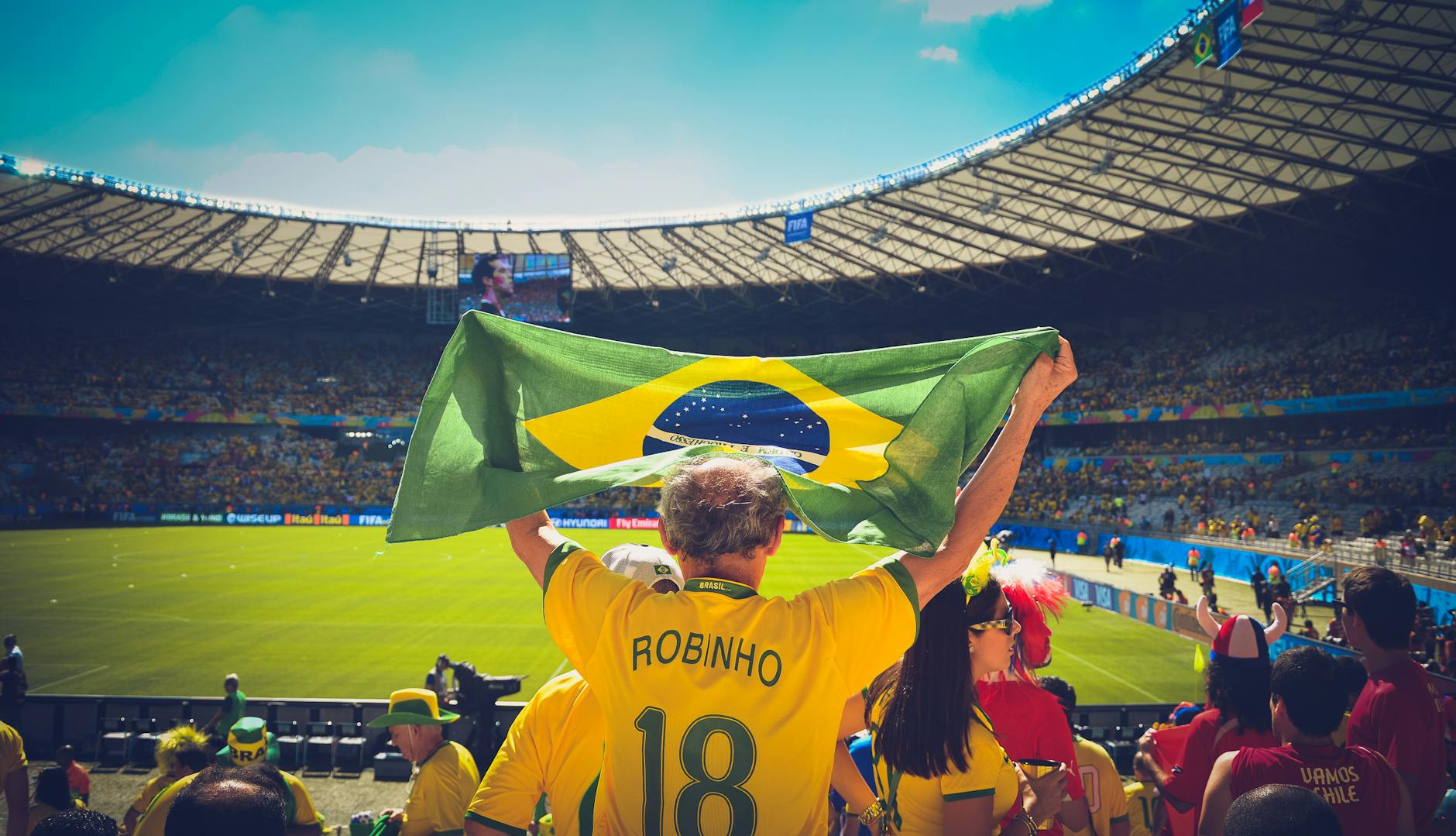
Photo by Caio on Pexels
Want a clearer daily tournament overview? Goal Moments tracks the numbers behind the headlines.
Myth 1: More teams automatically mean lower-quality football — debunked
The 48-team FIFA World Cup does not automatically reduce quality because the knockout stage still concentrates the strongest teams after the group phase. The expanded format includes 12 groups of 4 teams, with the top 2 from each group plus the 8 best third-placed teams advancing to a 32-team knockout bracket. Quality will vary, but the tournament’s competitive structure still rewards consistency and depth.
The old argument assumes that weaker teams cannot produce meaningful matches against elite opposition. History is less obedient. Morocco reached the 2022 semifinals, Croatia reached the 2018 final and 2022 semifinal, and Costa Rica topped a 2014 group containing Uruguay, Italy, and England. Tournament football is a small sample, and small samples are where probability enjoys making analysts look unemployed.
The bigger issue is not whether every team has equal technical quality. It is whether the format produces enough meaningful incentives. A four-team group creates three matches per team, and goal difference may become decisive when several teams finish on 4 points. That means a late goal in the 78th minute can have greater value than casual viewers realize, particularly when third-place qualification is calculated across 12 groups.
For prediction work, separate “team strength” from “match motivation.” A favored side may rotate after securing qualification, while an underdog may need a draw rather than a win. This is where a [Internal Link: FIFA World Cup group-stage qualification guide] can save readers from making the classic mistake of treating every group match like a final.
Myth 2: The 2026 FIFA World Cup is just a longer version of 2022 — partially true
The 2026 FIFA World Cup shares the same basic football objective as Qatar 2022, but its geography and schedule create materially different demands. The 2022 tournament used 8 venues in one country, while 2026 uses 16 venues across three nations, including Vancouver, Toronto, Mexico City, Monterrey, Atlanta, Dallas, Los Angeles, Miami, and Seattle. Travel, climate, altitude, and recovery therefore become practical variables rather than background trivia.
The tournament will also feature 104 matches, which increases the total information available to analysts but creates more noise. A team with a 70% win rate across qualification does not automatically deserve the same rating at a neutral-site World Cup match. Qualification campaigns vary by confederation, opponent strength, travel distance, and schedule density. UEFA, CONMEBOL, CONCACAF, CAF, AFC, and OFC do not provide identical competitive environments, so raw records require adjustment.
Mexico City introduces altitude considerations at roughly 2,240 metres above sea level. Heat and humidity may matter in cities such as Miami, while cold-weather adaptation can affect matches in Canada and northern United States venues. FIFA’s “official” tournament branding naturally emphasizes unity; the logistical spreadsheet is less poetic but more useful. Analysts should record venue, kickoff time, rest days, and travel distance for every match rather than relying on a generic home-field label.
A practical match file should include:
- Venue altitude, expected temperature, and humidity.
- Days since each team’s previous match.
- Travel distance and time-zone changes.
- Suspensions, injuries, and likely rotation.
- Opponent-adjusted attacking and defensive metrics.
See the tournament logistics and venue context in our [Internal Link: 2026 World Cup schedule and venue analysis] before comparing team records.
Get started with evidence-based match preparation, not recycled “dark horse” slogans.
Myth 3: A famous striker decides every World Cup match — flat-out false
A famous striker can influence a FIFA World Cup match, but individual reputation does not decide the majority of outcomes by itself. Team spacing, ball progression, pressing resistance, set pieces, goalkeeper performance, and defensive transitions usually create the conditions in which a striker can succeed. In a single-elimination match, one penalty or red card can outweigh months of attacking statistics.
The data problem is familiar: goals are visible, while the actions that create them are distributed across the team. A striker’s expected goals, or xG, may fall because midfielders cannot deliver passes into the penalty area. Conversely, a forward may score from low-probability chances without demonstrating repeatable superiority. That distinction matters when evaluating players such as Kylian Mbappé, Erling Haaland, Harry Kane, Lionel Messi’s historical World Cup impact, or emerging talents from Brazil, Argentina, France, Spain, Germany, and England.
Set pieces deserve special attention because they are repeatable, opponent-specific situations. A team that generates 6 corners per match but concedes aerial chances on defensive corners may look strong in one dashboard and fragile in another. Penalty shootouts add another layer: they are not purely random, but goalkeeper tendencies, taker selection, fatigue, and psychological pressure make pre-match certainty financially expensive.
One useful edge case is shot-location stability. If a team’s scoring surge comes from 20-yard shots rather than central penalty-area attempts, regression risk is high because long-range conversion rates are typically less stable. Goal Moments can frame these distinctions through player statistics, tactical matchups, and responsible prediction analysis rather than presenting “guaranteed” outcomes. No serious analyst should promise certainty; football has already rejected several thousand such promises.
What actually works when analyzing the 2026 FIFA World Cup?
The most effective FIFA World Cup analysis combines opponent-adjusted performance, tactical fit, squad availability, and tournament context rather than using rankings alone. A practical model should compare recent form with longer-term strength, weight injuries and suspensions, and estimate how each team’s style interacts with its next opponent. The process is more reliable when every assumption is recorded before kickoff.
Start with a repeatable workflow:
- Establish baseline strength. Use FIFA rankings, Elo-style ratings, qualification performance, and opponent quality.
- Measure chance quality. Compare non-penalty xG, shots inside the box, big chances, and goals conceded from transitions.
- Map tactical interaction. Ask whether a team can bypass pressure, defend wide areas, and protect the space behind its midfield.
- Adjust for personnel. Separate the absence of a starting goalkeeper from the absence of a rotation winger; the impact is not symmetrical.
- Price uncertainty. Use ranges instead of a single confident scoreline, especially before final squads are confirmed.
- Review the forecast. After the match, identify whether the process failed or merely encountered variance.
This method produces a contrarian but useful conclusion: “form” is often less valuable than tactical compatibility. A team may have won 5 of its last 6 matches, yet those victories may have come against deep defensive blocks that do not resemble its World Cup opponent. Conversely, a team with two recent draws may have faced elite press-resistant sides and generated better underlying chances than its record suggests.
The official FIFA Regulations for the FIFA World Cup 2026 should be checked for competition rules, squad provisions, disciplinary details, and operational updates. FIFA’s governing documents matter because tournament assumptions can become outdated quickly. As the regulation framework puts it, “the regulations govern the organisation and staging of the competition”; that is less exciting than a 90th-minute winner, but considerably more dependable.
What should fans track before each match?
Fans should track confirmed lineups, rest, venue conditions, tactical roles, and market movement before interpreting a FIFA World Cup prediction. The most useful checklist starts 48 hours before kickoff and becomes more precise after official team news. A prediction that ignores the starting goalkeeper or central defensive pairing is not analysis; it is decorative typing.
A simple pre-match table can include:
- Starting goalkeeper and defensive continuity.
- Full-back positioning against the opponent’s strongest winger.
- Midfield availability and ball-progression options.
- Set-piece takers and aerial matchups.
- Expected weather, altitude, and kickoff conditions.
- Rest days and travel from the previous venue.
- Whether qualification status encourages rotation.
- Differences between public narrative and measurable performance.
A specific operational insight is that late information has unequal value. A confirmed striker absence may move attacking expectations, but the replacement’s role matters more than his name. If the replacement is a direct runner against a high defensive line, total team xG might decline less than expected; if the opponent defends deep, the change could be much more damaging. The “star missing” headline is therefore incomplete without a tactical replacement analysis.
Another useful edge case involves third-place qualification. In a 12-group format, teams may enter the final group match needing only a draw, while another team must chase a two-goal margin. That changes late-game risk, defensive line height, and substitution patterns. Read our [Internal Link: World Cup tactical prediction checklist] for a structured way to evaluate those scenarios.
Want to compare team tactics and player numbers before the next fixture? Use Goal Moments as a daily reference point.
What should fans ignore when reading FIFA World Cup coverage?
Fans should ignore guaranteed predictions, isolated statistics, unnamed “insider” claims, and historical comparisons that omit context. These signals are popular because they are easy to publish, not because they consistently improve accuracy. A team’s 100% record in a specific stadium may be based on 2 matches, which is mathematically impressive only if one enjoys bullying tiny samples.
Avoid these common traps:
- Head-to-head history without current squads: a 2010 result says little about a 2026 midfield.
- Raw possession: 65% possession can mean control or harmless circulation.
- One-match xG: a red card can distort the entire sample.
- Social-media sentiment: popularity measures attention, not probability.
- Unverified injury reports: wait for federation or club confirmation.
- “Must-win” language: define whether a draw, goal difference, or third-place route changes the actual objective.
- Fixed staking systems: no progression method removes variance or guarantees profit.
Responsible gambling standards are also part of competent sports analysis. The Responsible Gambling Council emphasizes informed decision-making and limits, while the Alcohol and Gaming Commission of Ontario provides regulatory information relevant to Ontario’s legal gaming environment. Regulations vary across Canada, so readers should confirm local rules, age requirements, and licensed-operator status. Never treat Goal Moments predictions as financial advice, and never risk money needed for rent, food, debt payments, or emergency savings.
A disciplined approach uses a fixed entertainment budget, records forecasts separately from wagers, and stops when emotional chasing begins. If the spreadsheet starts looking like a cry for help, close the spreadsheet. The FIFA World Cup should remain football first, not an expensive subscription to stress.
How can Goal Moments improve 2026 World Cup research?
Goal Moments can improve 2026 FIFA World Cup research by organizing match predictions, team tactics, player statistics, and daily tournament coverage in one focused content environment. Its value is not a promise of perfect forecasts; it is the reduction of search time between a headline, the underlying data, and a practical tactical interpretation. Readers should still verify lineups, rules, and local gambling requirements independently.
The platform is particularly useful when a match requires several layers of comparison. A reader can examine a team’s recent results, then check whether those results were created by high pressing, counterattacking, set-piece efficiency, or goalkeeper overperformance. The next step is to compare those traits with the opponent’s vulnerabilities, because a team’s average strength is not identical to its strength in every matchup.
Daily tournament coverage also helps prevent outdated assumptions. A squad’s tactical identity may change after a coach alters the midfield structure, while a player’s role may shift from winger to wing-back or from advanced midfielder to deeper distributor. Those changes can invalidate a prediction based on last season’s data. The practical rule is to timestamp analysis: record when it was published, which lineup was expected, and which information was unavailable.
For readers following Canada, Mexico, the United States, Brazil, Argentina, France, England, Spain, Germany, Portugal, and other contenders, consistent terminology matters. Do not compare “form” in one article with “quality” in another unless the metrics are defined. Goal Moments’ FIFA World Cup focus makes that comparison easier, but the final decision should remain evidence-led and financially controlled.
What is the best way to use predictions without overconfidence?
The best way to use FIFA World Cup predictions is to treat them as probability-based scenarios, not guarantees or instructions to stake money. A useful forecast explains the likely result, the main uncertainty, and the conditions that would invalidate the view. For example, a team may be favored because of chance creation, but a goalkeeper injury or severe weather could materially change the estimate.
Use a three-column framework:
| Question | Evidence | Risk to the forecast |
|---|---|---|
| Who creates better chances? | Non-penalty xG and box entries | Small sample size |
| Who controls transitions? | High turnovers and defensive rest shape | Opponent changes formation |
| Who handles tournament pressure? | Experience and penalty history | Psychological claims are hard to measure |
This framework encourages calibrated language. “Team A has a 55% estimated win probability” is more honest than “Team A will definitely win.” The difference is not cosmetic: a 55% event still fails 45% of the time, which is why analysts who speak in absolutes eventually meet the scoreboard.
For anyone using legal betting services, compare the implied probability with your own estimate, account for margin, and set a hard spending ceiling before viewing odds. Do not increase stakes after a loss, borrow money, or chase a near miss. Readers seeking more context can review our [Internal Link: responsible World Cup prediction and bankroll guide] before making any decision.
Frequently Asked Questions
Q: What is the FIFA World Cup 2026 format?
A: The FIFA World Cup 2026 features 48 teams divided into 12 groups of 4 teams. The top 2 teams in each group and the 8 best third-placed teams advance to a 32-team knockout stage. The tournament contains 104 matches and is hosted by Canada, Mexico, and the United States, with the final scheduled for MetLife Stadium in New Jersey.
Q: When does the 2026 FIFA World Cup start and end?
A: The 2026 FIFA World Cup is scheduled to begin on June 11, 2026, and conclude with the final on July 19, 2026. Mexico City is scheduled to host the opening match, while MetLife Stadium is scheduled to host the final. Match times, venue operations, and broadcast details should be verified through FIFA and regional broadcasters as the tournament approaches.
Q: How can I analyze a FIFA World Cup match?
A: Analyze a FIFA World Cup match by combining team strength, opponent-adjusted chance creation, tactical matchup, player availability, rest, travel, and venue conditions. Start with non-penalty xG, box entries, transition defense, and set-piece performance rather than raw win-loss records. Then update the assessment after confirmed lineups because one goalkeeper, center-back, or midfield absence can materially change the forecast.
Q: What is the difference between FIFA World Cup rankings and match predictions?
A: FIFA rankings measure a team’s broader international performance, while match predictions estimate the probability of a specific result under particular conditions. Rankings do not fully account for tactical compatibility, injuries, travel, altitude, weather, or rotation. Goal Moments uses predictions as analytical scenarios, so readers should treat them as information rather than guaranteed outcomes.
Q: Is the 48-team World Cup format better than the 32-team format?
A: The 48-team format provides broader global representation and increases the tournament from 64 to 104 matches, but it also creates more scheduling and quality variation. More nations receive access to the group stage, which can improve football development and regional interest. However, fans should expect a longer competition and should compare teams using opponent quality instead of assuming every match has identical competitive standards.
Q: What should I do if a World Cup prediction looks wrong after the lineup announcement?
A: Recheck the prediction after the lineup announcement and identify whether the tactical assumptions changed. Compare the replacement player’s role, defensive structure, set-piece responsibilities, and expected game plan rather than reacting only to the missing player’s reputation. If the revised information creates uncertainty, the financially responsible choice is to reduce exposure or skip the decision instead of chasing a last-minute opinion.
Q: Does Goal Moments guarantee accurate FIFA World Cup predictions?
A: No, Goal Moments does not guarantee accurate FIFA World Cup predictions because football outcomes contain substantial variance. Goal Moments provides match analysis, tactical context, player statistics, and tournament coverage to help readers make more informed judgments. Predictions should be treated as probabilities, and any gambling activity must follow local laws, licensed-provider rules, age requirements, and personal spending limits.
The 2026 FIFA World Cup rewards preparation because 48 teams, 104 matches, 16 venues, and three host nations create more variables than any previous edition. The strongest analysis will combine data with context: tactical fit, confirmed personnel, travel, rest, venue conditions, and qualification incentives. Ignore certainty sellers, record assumptions, and use Goal Moments for structured daily coverage while keeping entertainment spending strictly controlled.
Ready to follow the tournament with sharper data and clearer tactical context? Visit Goal Moments for ongoing 2026 FIFA World Cup coverage.