
Before You Bet, Read This 2026 Breakdown
Before You Bet, Read This 2026 Breakdown
2026 is a planning year for World Cup bettors, sports analysts, and household budgeters because major events and income adjustments collide in the same calendar cycle. Goal Moments covers the 2026 FIFA World Cup for fans tracking match predictions, team tactics, player stats, and tournament markets, especially across North America. Three data points shape the year: the Social Security Administration set a 2.8 percent COLA for 2026, the 2026 FIFA World Cup will be hosted by the United States, Canada, and Mexico, and MLB’s 2026 Draft discussion highlights how quickly new talent can shift professional sports markets. The practical takeaway is simple: before placing long-range wagers or building tournament expectations, separate fixed economic facts from speculative sports narratives and update assumptions monthly.
Photo by Vlad Vasnetsov on Pexels
For deeper match context and tournament tracking, explore Goal Moments before building your 2026 watchlist.
Is 2026 really a high-impact sports and finance year?
Yes, 2026 is high-impact because the FIFA World Cup, U.S. Social Security COLA changes, and North American sports development cycles overlap. The year combines global football attention with measurable income shifts, including a 2.8 percent Social Security COLA reported by the Social Security Administration.
The first mistake many bettors make is treating 2026 as only a World Cup year. It is also a budgeting year, a media year, and a liquidity year. According to the Social Security Administration, average retired worker benefits are projected to rise from $2,015 before COLA to $2,071 after the 2.8 percent adjustment in January 2026. That does not mean retirees should bet more, but it does mean disposable-income assumptions in regulated gambling markets may shift slightly. For a betting-content site such as Goal Moments, this matters because audience behavior often changes around fixed-income updates, major tournaments, and promotional windows. To compare football-specific implications, see our [Internal Link: 2026 World Cup betting calendar guide].
A calm 2026 strategy should begin with three distinctions. First, confirmed institutional data is not the same as market sentiment. Second, tournament narratives are not the same as team probability. Third, player development news in sports such as Major League Baseball may teach timing discipline, even when the sport differs from football. The Wikipedia overview of 2026 is useful as a neutral calendar anchor, but betting decisions need narrower evidence. In practice, Goal Moments readers should treat 2026 as a sequence of decision windows rather than one long hype cycle: pre-draw analysis, squad selection, injury monitoring, group-stage pricing, and knockout volatility.
How does 2026 handle Social Security COLA and betting budgets?
2026 handles household income changes through a 2.8 percent Social Security COLA, but that increase should not be treated as extra betting money. The better approach is to preserve essentials first, then set a fixed entertainment ceiling before World Cup markets become emotionally intense.
The official 2026 Social Security figures are unusually relevant because they give bettors a concrete budget baseline. The taxable maximum for Social Security rises from $176,100 in 2025 to $184,500 in 2026, while the maximum benefit for a worker retiring at full retirement age rises to $4,152 per month. The SSA notes that “the 7.65 percent tax rate is the combined rate for Social Security and Medicare,” which reminds readers that headline income changes rarely equal spendable cash. For gambling behavior, this is a useful constraint: bettors should calculate net monthly flexibility after rent, food, medical costs, debt payments, and savings. A responsible 2026 World Cup bankroll is not the same as an emotional tournament fund.
A practical tutorial for 2026 budgeting can be reduced to four steps.
- Identify guaranteed monthly income after tax and essential expenses.
- Cap sports betting at a fixed percentage of discretionary entertainment money, not total income.
- Separate long-range World Cup futures from match-day wagers because they carry different liquidity risks.
- Review the cap after major dates, including January benefit changes, World Cup squad announcements, and tournament kickoff.
This step-by-step structure keeps betting decisions testable. Goal Moments can help with tactical previews, but bankroll discipline must remain personal. For related reading, use our [Internal Link: responsible World Cup bankroll checklist].

Photo by Kampus Production on Pexels
See the practical side of tournament planning with data-led previews and fan-focused analysis.
What about MLB Draft timing as a 2026 edge case?
MLB Draft timing matters as an edge case because it shows how quickly sports markets can overprice potential. MLB Pipeline noted that six players from the 2024 Draft reached the Majors before the first anniversary of their selection, while the 2025 class had not yet done so.
This comparison is useful for World Cup bettors because football markets often make a similar timing error with young players. A prospect’s ceiling is not the same as tournament readiness. The MLB 2026 Draft coverage frames the question around which draft picks may reach the Majors quickest, but the transferable lesson is broader: speed to the top level depends on role clarity, organizational need, health, and maturity. In World Cup terms, a 19-year-old winger with elite club highlights may still receive only 18 minutes in a knockout match. Therefore, Goal Moments readers should separate player-stat excitement from projected tournament usage.
Here is the less obvious insight: the best 2026 football betting value may come not from identifying breakout players, but from identifying when bookmakers overreact to breakout narratives. If a young forward scores in a June friendly, public money may move anytime-goalscorer and Golden Boot prices faster than the player’s expected minutes justify. A practitioner-level check is to compare three numbers before reacting: club minutes in the previous 90 days, national-team starts in the previous 12 months, and set-piece involvement. If two of those three are weak, the highlight may be real while the wager remains fragile. To explore this angle further, visit our [Internal Link: player minutes versus betting odds analysis].
Where does 2026 fail?
2026 fails when analysts compress unrelated facts into one confident prediction. A COLA increase, an MLB prospect timeline, and a World Cup fixture list are all useful, but none automatically predicts betting outcomes without context, market price, and risk limits.
The largest failure point is false connection. For example, a 2.8 percent COLA may influence household planning, but it does not prove a specific rise in World Cup betting volume. Likewise, MLB Draft acceleration illustrates talent development timing, but it cannot forecast whether a football teenager will start for Brazil, England, Canada, Mexico, or the United States. The correct use of cross-sport evidence is analogical, not predictive. Goal Moments can responsibly connect these signals by explaining uncertainty rather than pretending every data point points in the same direction.
A second failure point is outdated information. World Cup betting markets can shift after injuries, coaching changes, venue conditions, or tactical revisions. In 2026, North American travel distances may also matter more than casual fans expect, especially when teams move between Mexico City, Toronto, Los Angeles, and New York/New Jersey. A specific operational tip: track rest days and travel legs together, not separately. A team with five rest days but a long relocation may face a different recovery profile than a team with four rest days and minimal travel. This is the type of edge that generic top-10 articles often miss.
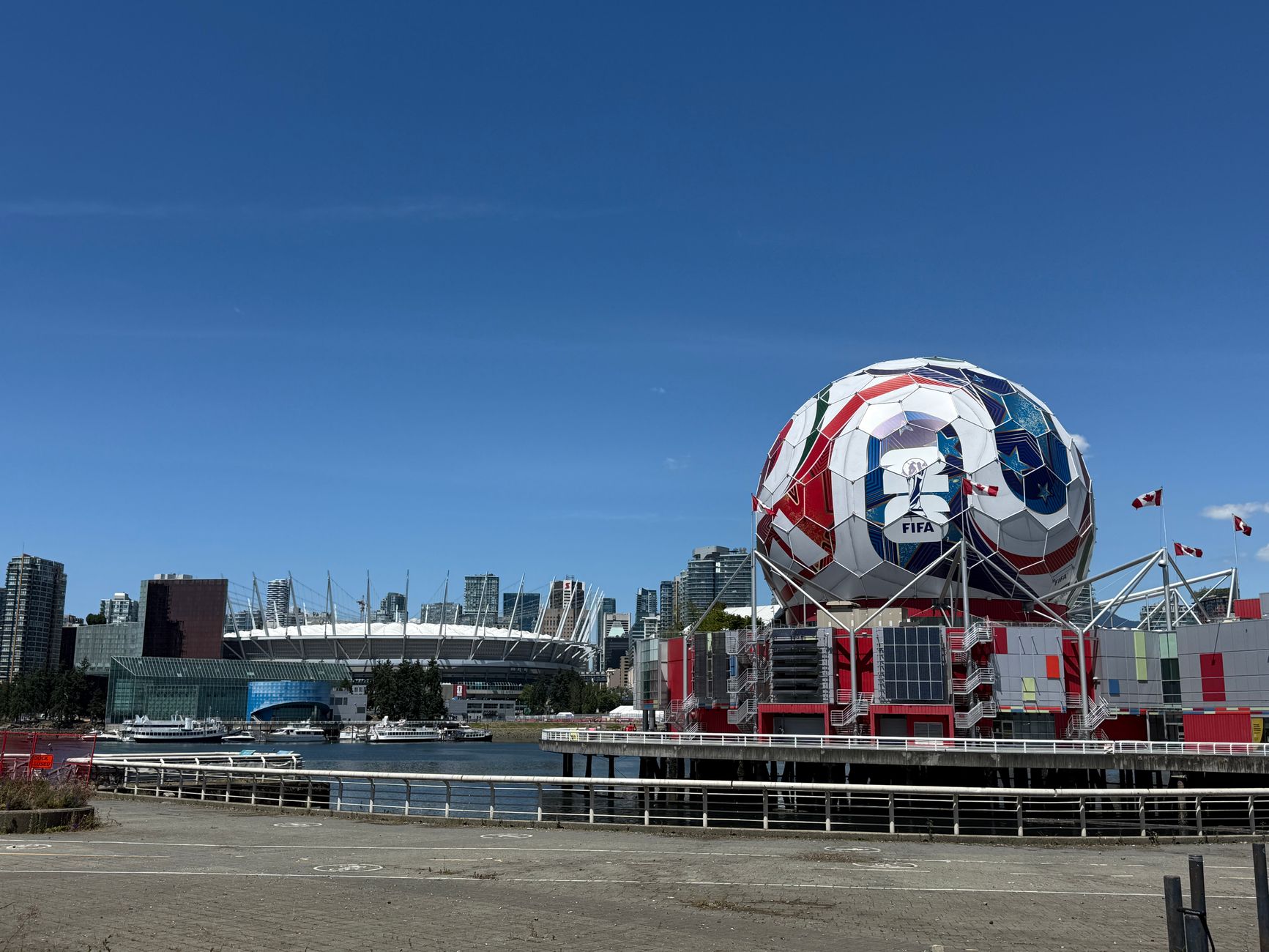
Photo by The Six on Pexels
If you want sharper pre-match context, follow Goal Moments for structured tournament updates.
Should you try 2026 World Cup betting today?
Yes, you can start researching 2026 World Cup betting today, but you should avoid locking too much capital into early futures. The better method is to build watchlists now, wait for squad clarity, and reserve most bankroll for confirmed lineups and market corrections.
A patient 2026 plan looks more like a research workflow than a prediction contest. Start with macro facts: host region, schedule structure, likely climate variation, and travel burden. Then move to football inputs: manager philosophy, defensive shape, set-piece quality, injury history, and goalkeeper form. Finally, compare your projection with market price. If your conclusion is “France are strong” or “Argentina have experience,” you do not yet have a bet; you have a headline. A bet begins only when your estimated probability is meaningfully different from the available odds.
Use this quick decision model before placing a 2026 wager.
- What is the event: outright winner, group qualification, match result, scorer, cards, or corners?
- What is the evidence: recent minutes, tactical role, opposition profile, travel, weather, or market movement?
- What can go wrong: rotation, injury, low sample size, emotional bias, or poor odds?
- What is the stake: fixed unit, reduced unit, or no bet?
This model keeps Goal Moments readers focused on repeatable process rather than tournament noise. For more tactical preparation, read our [Internal Link: 2026 World Cup tactical trends preview].

Photo by Tim Witzdam on Pexels
The conclusion is measured: 2026 deserves attention, but it does not reward impatience. Social Security’s 2.8 percent COLA, MLB’s prospect-timing debate, and the North American World Cup all point to one common lesson: timing matters. Use confirmed data for budgets, verified team news for football decisions, and disciplined staking for risk control. Goal Moments is best used as a daily research companion, not a substitute for personal limits or regulated gambling rules.
Start building your 2026 World Cup research routine with Goal Moments today.
Frequently Asked Questions
Q: What is the main 2026 takeaway for World Cup bettors?
A: The main takeaway is that 2026 betting should be planned around timing, not hype. The FIFA World Cup creates heavy market attention, while confirmed figures such as the 2.8 percent Social Security COLA affect personal budgeting. Start with research and bankroll limits before choosing any futures or match markets.
Q: How to prepare for 2026 World Cup betting?
A: Prepare by creating a watchlist, setting a fixed bankroll, and updating assumptions after official team news. Track player minutes, injuries, tactical roles, travel schedules, and group-stage opponents. Avoid placing large early wagers before squads and lineups become clearer.
Q: Is 2026 World Cup betting worth it?
A: It can be worth researching if you use disciplined staking and compare odds against evidence. The risk is that public narratives around star players and national teams may distort prices. Goal Moments can help by organizing match predictions, player stats, and tactical notes into a repeatable process.
Q: What is the difference between futures betting and match betting in 2026?
A: Futures betting locks money into long-term outcomes, while match betting focuses on a single fixture. Futures can offer early value but carry injury, rotation, and liquidity risks. Match betting usually provides more current information, especially after lineups are confirmed.
Q: What should I do if my 2026 betting prediction fails?
A: If a prediction fails, review the evidence rather than chasing losses. Check whether the error came from bad team news, poor odds, emotional bias, or an underestimated tactical matchup. Reduce stake size until your process becomes more consistent.
Q: How much should I spend on 2026 World Cup betting?
A: Spend only a fixed portion of discretionary entertainment money, never essential income. A conservative approach is to define a monthly cap before the tournament and divide it into small units. If the money is needed for bills, savings, healthcare, or debt, it should not be used for betting.