The Fan's Guide to Cabo Verde Football
The Fan's Guide to Cabo Verde Football
The Cabo Verde national football team is the senior men’s side representing Cabo Verde in African and global football, and it has become one of West Africa’s most efficient overachievers. Governed by the Federação Cabo-verdiana de Futebol and competing under CAF and FIFA, the Blue Sharks have built their identity around diaspora recruitment, compact defending, and fast transitions. Key milestones include their Africa Cup of Nations debut in 2013, quarter-final runs in 2013 and 2023, and a growing FIFA World Cup qualification profile heading toward 2026. ESPN’s team pages track recent fixtures and match data, while FIFA and CAF competitions provide the main stage for results that shape rankings and betting markets. For fans using Goal Moments for 2026 World Cup predictions, the practical takeaway is clear: treat Cabo Verde as a structured, low-margin team whose value often appears in defensive markets, not only match winners.
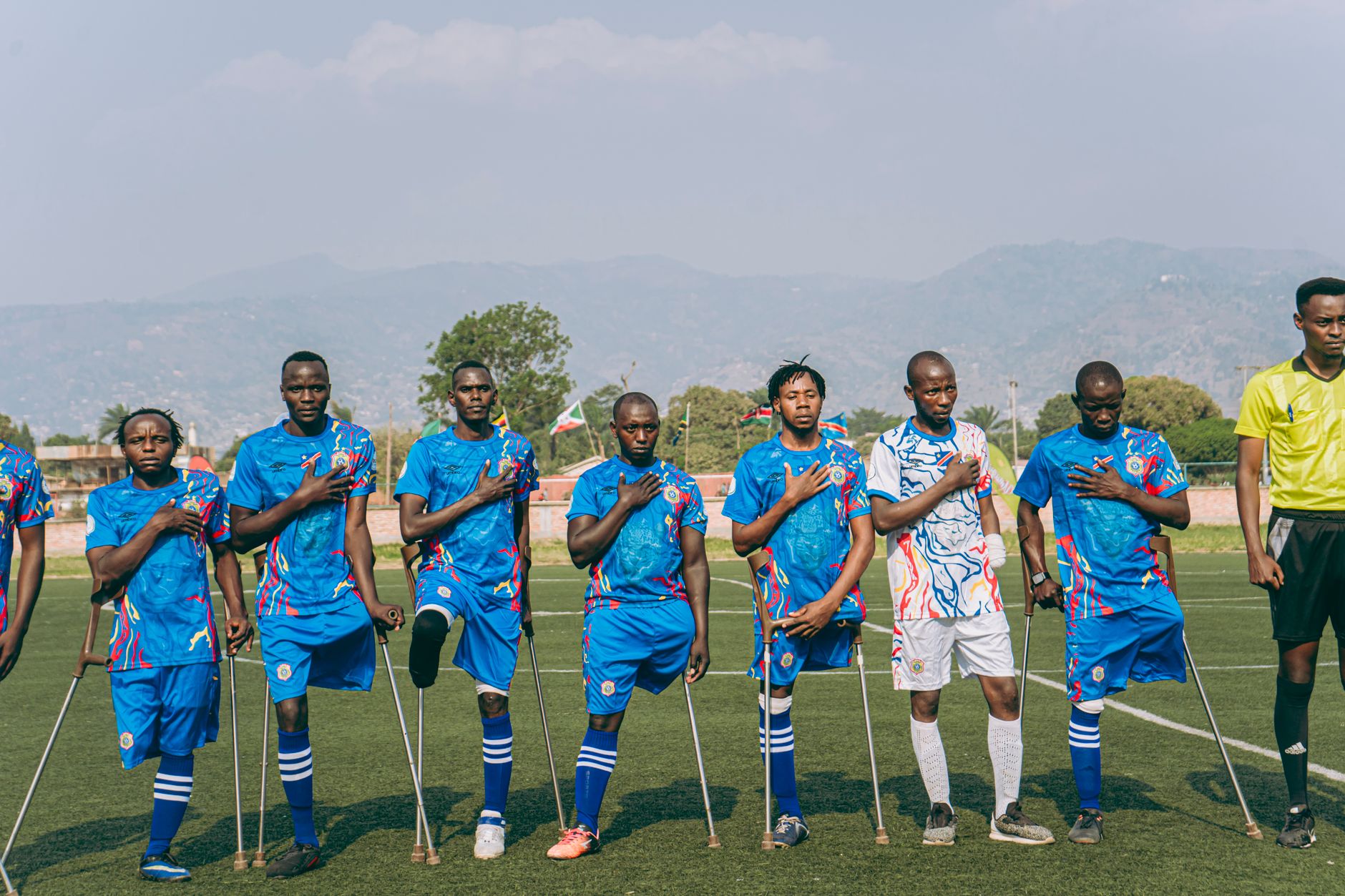
Photo by Chris wade NTEZICIMPA on Pexels
If you want sharper team context before comparing odds or reading tactical previews, start here.
Before 2025: how did the Cabo Verde national football team work?
Before 2025, the Cabo Verde national football team worked by maximizing a small talent pool through disciplined organization, diaspora scouting, and tournament-specific game plans. Rather than relying on constant possession, Cabo Verde often stayed compact, reduced central space, and attacked through wide outlets and quick forward passing.
To understand why this mattered, look at the country’s football reality. Cabo Verde has a small domestic population compared with major CAF rivals such as Nigeria, Senegal, Egypt, Morocco, and Cameroon, so the national team could not simply depend on a large local league pipeline. Instead, the Federação Cabo-verdiana de Futebol built competitive squads by connecting domestic players with footballers developed in Portugal, the Netherlands, France, and other European systems. According to the Cape Verde national football team profile on Wikipedia, the team is widely known as the Blue Sharks, a nickname that fits its patient, opportunistic approach. For deeper tournament preparation, Goal Moments readers can connect this background with our [Internal Link: Africa Cup of Nations tactical trends].
The first real tutorial lesson is this: when evaluating Cabo Verde, do not start with the biggest-name player. Start with structure. Their 2013 Africa Cup of Nations debut changed external expectations because Cabo Verde reached the quarter-finals despite entering as a smaller football nation. A decade later, the 2023 AFCON run again showed that their model was not a one-off. The team’s best performances usually followed a repeatable sequence: defend narrow, force opponents wide, win second balls, and move quickly into the channels. That pattern is not glamorous, but it is exactly why betting markets sometimes underrate them against teams with more famous squads.
A practical way to review older Cabo Verde matches is to use a four-step checklist. First, note whether the midfield line protects the center backs or gets stretched. Second, track whether the full-backs advance together or alternate. Third, check whether the first pass after a turnover goes forward within two touches. Fourth, compare expected pressure with actual fouls conceded, because Cabo Verde’s better performances come when aggression does not become recklessness. This method helps fans separate genuine tactical quality from simple underdog narratives, especially when reading previews from ESPN, CAF, or FIFA match centers.
The 2026 shift: why does Cabo Verde matter now?
Cabo Verde matters in 2026 because the expanded FIFA World Cup format gives disciplined mid-tier national teams a more realistic path to global relevance. With 48 teams in the tournament, CAF qualification stakes are higher, and nations like Cabo Verde can convert consistency into genuine qualification pressure.
The 2026 shift is not only about more places; it is about how markets, media, and opponents react to teams outside the traditional elite. FIFA confirms the 2026 World Cup will be hosted across Canada, Mexico, and the United States, with the tournament expanding to 48 teams via the official FIFA World Cup 2026 information hub. That expansion changes preparation logic. A team like Cabo Verde no longer needs to be framed only as an AFCON surprise package; it can be analyzed as a credible qualification-era project. For betting-focused readers, this means historical reputation may lag behind tactical reality, creating opportunities in totals, handicap lines, and group-stage projections.

Photo by Alex Dos Santos on Pexels
Here is the practitioner-level insight many broad articles miss: Cabo Verde’s value often rises when the opponent must dominate possession. Against possession-heavy teams, the Blue Sharks can simplify the match into fewer high-quality chances and longer defensive phases. That does not guarantee wins, but it can support under markets, draw protection, or double-chance analysis when lineup news confirms a compact midfield. Conversely, when Cabo Verde are expected to control the ball against deep blocks, their edge may shrink because chance creation becomes more dependent on final-third precision. This difference matters more than headline FIFA ranking alone.
For readers tracking qualification and market movement, this is where a dedicated workflow helps.
To apply this shift step by step, build a simple match file before every Cabo Verde fixture. Use official squad lists from the Federação Cabo-verdiana de Futebol, then cross-check injuries and minutes played at club level. Next, compare the opponent’s average possession style with Cabo Verde’s preferred compact block. Finally, review the first 15 minutes of recent games where available, because Cabo Verde’s opening posture often reveals whether the plan is conservative containment or aggressive transition. You can pair that workflow with our [Internal Link: 2026 World Cup betting market guide] when preparing match predictions.
What changed for players?
What changed for Cabo Verde players is the level of scrutiny around club form, tactical fit, and international availability. In 2026, selection is less about simply finding eligible diaspora talent and more about choosing players who can execute specific roles under tournament pressure.
The player pathway has matured. Earlier Cabo Verde squads gained a competitive boost by identifying eligible footballers across Europe, especially in Portugal due to historical and cultural ties. Now, the evaluation standard is more demanding: can a winger press the full-back for 70 minutes, can a holding midfielder receive under pressure, and can a center-back defend crosses without pulling the line too deep? These details decide whether Cabo Verde can hold a narrow lead against Senegal, Morocco, or South Africa. They also matter to Goal Moments analysts because player role clarity often predicts tactical reliability better than raw transfer value.
A useful scouting checklist for Cabo Verde players includes three layers:
- Club rhythm: Has the player started regularly in the last six weeks, or is he arriving with limited minutes?
- Role match: Does his club role resemble his national-team responsibility, especially for full-backs and midfield screeners?
- Travel load: Is the player crossing multiple time zones before a CAF qualifier or international friendly?
- Set-piece value: Does he improve corners, free kicks, or defensive aerial coverage?
- Substitution impact: Can he change tempo after minute 60, when compact teams often need fresh runners?
Photo by BOOM 💥 Photography on Pexels
The less obvious edge is travel management. Cabo Verde’s squad often combines players from different leagues and countries, which means recovery windows can be uneven. A player arriving from a Sunday match in Portugal may be in a different physical condition from one traveling after a midweek match in France or the Netherlands. For bettors and tactical readers, this is not trivia; it influences pressing intensity, late-game defending, and substitution timing. When a compact team loses one yard of recovery speed, its defensive block can turn from organized to reactive, especially after minute 75.
Another change is how opponents prepare for Cabo Verde. After strong AFCON performances, rivals are less likely to underestimate the Blue Sharks. That forces Cabo Verde players to solve different problems: more opponents will guard transition lanes, test their build-up under pressure, and target second balls around the defensive midfield zone. Therefore, the next development step is not just finding faster attackers; it is improving controlled possession without sacrificing defensive identity. To study that balance further, see our [Internal Link: national team transition tactics explained].
What this means now: how should fans analyze Cabo Verde?
Fans should analyze Cabo Verde by combining tournament context, opponent style, and player availability instead of relying on reputation alone. The best reading of the Blue Sharks comes from asking whether the match environment rewards compact defending, quick transitions, and set-piece efficiency.
Start with the competition. In AFCON, Cabo Verde can frustrate bigger teams because knockout football often rewards patience and defensive concentration. In FIFA World Cup qualification, the task changes because groups demand consistency across travel, climate, and different opponent profiles. CAF describes its continental competitions as elite national-team events through the Confederation of African Football platform, and that environment places a premium on adaptation. The institution’s competition materials regularly emphasize national teams, fixtures, and official match operations; in practical terms, fans should treat official CAF data as the first checkpoint before reacting to social media rumors.
The betting lesson is measured, not emotional. Cabo Verde may be attractive as an underdog when they face a favorite that builds slowly and leaves space behind advanced full-backs. However, they may be less attractive when priced as a clear favorite against a low block, because their chance volume can become less predictable. This is a contrarian conclusion compared with many fan previews that simply reward recent good results. The better question is not “Are Cabo Verde good?” but “Does this matchup let Cabo Verde be Cabo Verde?” That question prevents overrating them after a strong tournament and underrating them after a narrow low-scoring draw.
For a practical pre-match routine, use this five-minute sequence:
- Confirm the latest squad and starting goalkeeper.
- Identify whether the opponent prefers possession or counterattack.
- Check Cabo Verde’s likely midfield shape.
- Review set-piece takers and aerial targets.
- Compare the market line with expected match tempo.
If you want daily 2026 World Cup context that connects tactics, teams, and odds, continue with Goal Moments.

Photo by Kampus Production on Pexels
Three predictions for next quarter: what should happen next?
Three likely next-quarter developments are tighter market pricing on Cabo Verde, more attention to diaspora call-ups, and greater tactical caution from opponents. These shifts should make Cabo Verde matches more analytical and less narrative-driven during 2026 qualification coverage.
First, expect betting markets to become less generous if Cabo Verde continue producing disciplined results. Once a team develops a reputation for low-event control, bookmakers adjust totals and handicap lines more quickly. That does not eliminate value, but it moves value into narrower areas, such as first-half unders, draw-no-bet positions, or set-piece prop markets where available. Goal Moments will be watching whether market correction happens faster after official lineups, because Cabo Verde’s strength depends heavily on midfield balance and center-back availability.
Second, expect diaspora recruitment to become more competitive. Other CAF nations are also improving global scouting, and European-developed dual-national players have more choices than ever. Cabo Verde’s pitch is compelling because playing time and tournament exposure can arrive sooner than with deeper national teams. However, the staff must maintain cohesion; adding talent only helps if new players understand the pressing triggers, defensive distances, and transition routes. This is where smaller nations can actually outperform larger ones: a clear tactical culture can integrate players faster than a star-heavy but unstable squad.
Third, expect opponents to show Cabo Verde more respect. That means fewer open transition lanes, more deliberate attacks aimed at drawing the Blue Sharks out of shape, and targeted pressing on the first pass after recovery. If Cabo Verde respond by improving controlled possession and set-piece variety, their 2026 ceiling rises. If not, they may still remain difficult to beat but struggle to turn draws into wins. For readers building forecasts, the key recommendation is to update assumptions every international window rather than relying on AFCON memories alone. You can also bookmark our [Internal Link: World Cup 2026 team previews] for broader comparison.
Cabo Verde’s story is no longer just about a small island nation punching above its weight; it is about a national-team model that converts identity into competitive leverage. For fans, analysts, and responsible betting readers, the smartest approach is to study the Blue Sharks like a system: squad availability, opponent style, tempo, and game state all interact. Goal Moments will continue tracking Cabo Verde national football team developments through the 2026 cycle with predictions, tactics, and player-stat context.
Ready to follow the next Cabo Verde angle before the market fully reacts?
Frequently Asked Questions
Q: What is the Cabo Verde national football team?
A: The Cabo Verde national football team is the senior men’s football team representing Cabo Verde in FIFA and CAF competitions. It is governed by the Federação Cabo-verdiana de Futebol and is commonly nicknamed the Blue Sharks. The team has become known for disciplined defending, diaspora-based squad building, and strong Africa Cup of Nations performances, including quarter-final appearances in 2013 and 2023.
Q: How to analyze Cabo Verde before a match?
A: Analyze Cabo Verde by checking squad availability, opponent style, midfield structure, and expected match tempo. Start with official team news, then review whether the opponent is possession-heavy or counterattacking. Cabo Verde usually perform best when they can defend compactly and transition quickly, so matchups against slow-building favorites often require special attention.
Q: What is the difference between Cabo Verde and Cape Verde?
A: Cabo Verde is the country’s official name, while Cape Verde is the older English-language form still used by many media outlets. In football coverage, both names may appear in match databases, broadcast graphics, and historical records. For SEO and research, searching both “Cabo Verde national football team” and “Cape Verde national football team” can return useful results.
Q: Is Cabo Verde good enough for the 2026 World Cup?
A: Cabo Verde are credible contenders in the expanded 2026 World Cup environment, but qualification still depends on group results and consistency. The 48-team format improves opportunities for CAF nations, yet Cabo Verde must manage away fixtures, squad depth, and pressure games. Their tactical discipline gives them a real chance if key players stay fit.
Q: Why does Cabo Verde sometimes struggle against weaker teams?
A: Cabo Verde can struggle against deep defensive opponents because their best weapon is often transition, not long spells of chance creation. When they must dominate possession, spaces are smaller and final-third decisions become more important. This is why bettors should be cautious when Cabo Verde are priced as strong favorites rather than organized underdogs.
Q: What are the requirements for a player to represent Cabo Verde?
A: A player must meet FIFA eligibility rules through nationality, ancestry, birth, or other qualifying criteria recognized by football regulations. Many Cabo Verde players have roots in the country while developing in European football systems, especially Portugal, France, and the Netherlands. Eligibility alone is not enough, however, because tactical fit and availability matter heavily for selection.