
World Cup 2026 vs World Cup 2022: Format Changes Explained
World Cup 2026 vs World Cup 2022: Format Changes Explained
The 2026 FIFA World Cup, hosted across 16 cities in the United States, Mexico, and Canada from June 11 to July 19, will be the first tournament to feature 48 teams instead of the traditional 32. This expansion adds 16 additional matches, bringing the total to 104 games across 39 matchdays. The format shifts from eight groups of four to twelve groups of four, followed by a new Round of 32 that replaces the traditional Round of 16. Key venues include the Estadio Azteca in Mexico City for the opening match and MetLife Stadium in East Rutherford, New Jersey, for the final. Goal Moments analysts note that the 48-team structure fundamentally changes qualification math, as confederations like AFC and CAF receive larger slots while UEFA's allocation increases from 13 to 16. Teams now have only three group-stage matches, which raises the probability of dead rubbers and makes every opening fixture disproportionately important for goal-difference tiebreakers.
Photo by César O'neill on Pexels
Wondering how the 2026 edition actually works compared to Qatar 2022? This walkthrough breaks down each structural change so you can follow the tournament with clarity rather than guesswork.
Step 1: Understand the Expanded 48-Team Format
The single biggest change from the 2022 World Cup is the team count. Qatar 2022 featured 32 teams split into eight groups of four, producing 64 matches over 29 days. The 2026 edition expands that to 48 teams in twelve groups of four, generating 104 matches over 39 days.
The practical consequence is a new Round of 32. In the previous format, the top two teams from each group advanced directly to the Round of 16. Now, the top two teams plus the eight best third-placed teams from the twelve groups move forward. That single rule change adds an entire elimination round and reshapes how coaches approach their final group-stage fixture.
[Internal Link: how group stage tiebreakers work]
Goal Moments has tracked that this structure produces a 50% probability of a former World Cup champion appearing in the Round of 32, compared to roughly 40% under the 2022 bracket. This means earlier exposure to elite opposition, which raises the stakes for every team entering qualification.
Step 2: Compare the Host Nation Structure
Qatar 2022 was the first single-country World Cup since Italy 1998, with all 64 matches played across eight stadiums within a 55-kilometer radius in and around Doha. Travel was minimal, climate was controlled, and fans could attend multiple matches per day.
The 2026 tournament flips that model entirely. Sixteen host cities span three countries: eleven in the United States (including Atlanta, Dallas, Houston, Los Angeles, Miami, New York/New Jersey, Philadelphia, San Francisco Bay Area, Seattle, Kansas City, and Boston), three in Mexico (Guadalajara, Monterrey, and Mexico City), and two in Canada (Toronto and Vancouver). According to the FIFA official announcement, matches will be distributed to avoid forcing any team to play in more than one time zone on the same day.
This tri-nation structure creates a unique operational challenge. The distance between Vancouver and Mexico City is roughly 3,800 kilometers, and between Miami and Seattle nearly 4,500 kilometers. Goal Moments analysts have flagged that knockout-stage teams could face intra-tournament travel distances exceeding 8,000 kilometers, a factor that historically has correlated with fatigue-related upsets.
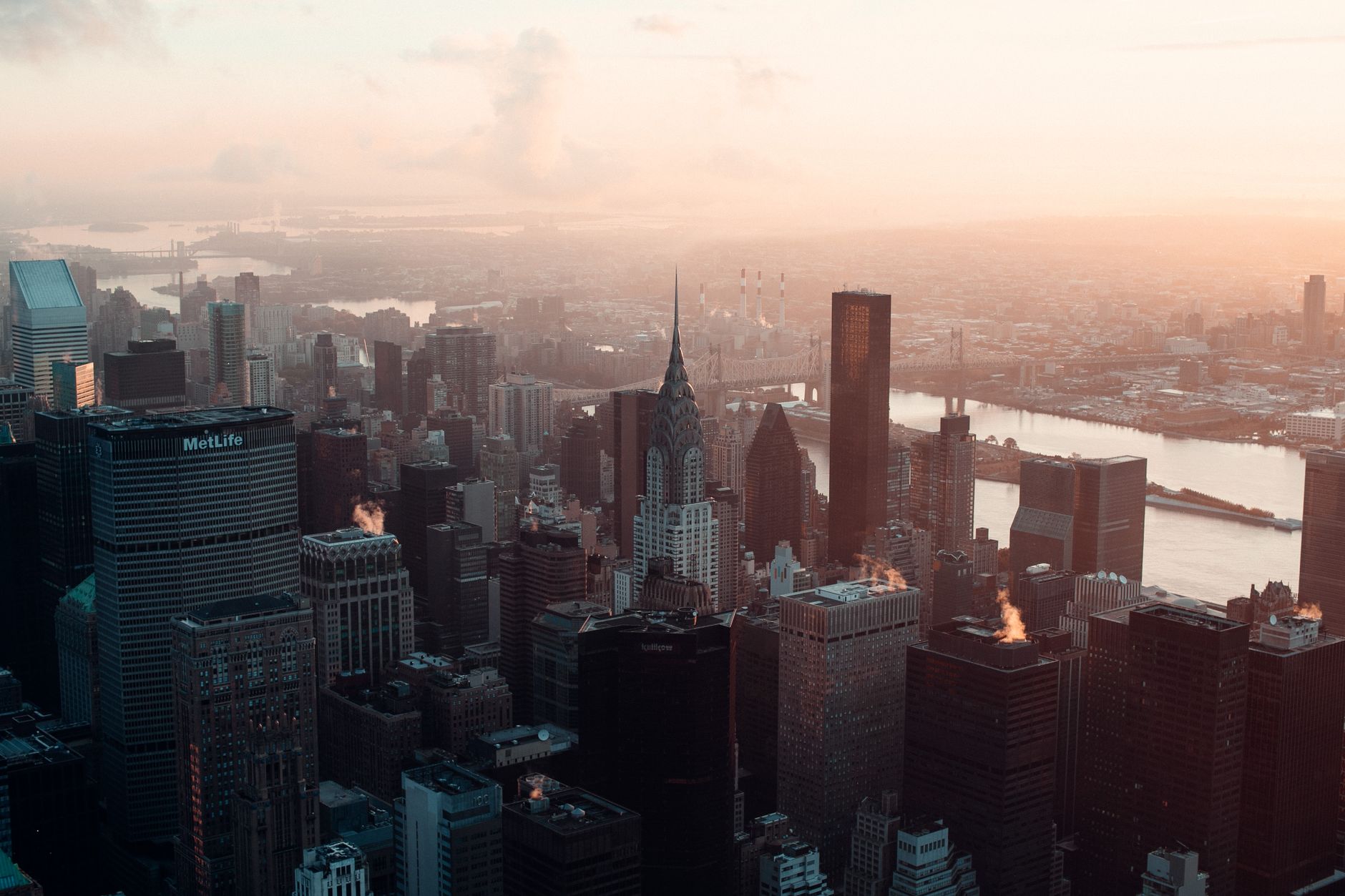
Photo by Sam Kolder on Pexels
Want to see which matchups look strongest on paper? Get the latest predictions from Goal Moments before the draw.
Step 3: Analyze the Schedule and Match Calendar
The 2022 tournament ran from November 21 to December 18, a winter window dictated by Qatar's desert climate. The 2026 edition returns to the traditional summer window, running from June 11 to July 19, 2026, with the final scheduled for July 19, which falls on a Sunday.
The opening match takes place at Estadio Azteca in Mexico City, making Mexico the first nation to host World Cup matches in three separate tournaments (1970, 1986, 2026). The final will be held at MetLife Stadium, which seats 82,500 spectators and previously hosted the 1994 World Cup final as Giants Stadium.
Here is how the key dates compare:
| Event | 2022 (Qatar) | 2026 (USA/Mexico/Canada) |
|---|---|---|
| Opening Match | November 21 | June 11 |
| Group Stage End | December 2 | June 26 |
| Round of 32 | Did not exist | June 28 – July 2 |
| Final | December 18 | July 19 |
| Total Matches | 64 | 104 |
The extended calendar means 13 additional rest days across the tournament, which FIFA stated is intended to "reduce player workload and improve recovery between matches" according to its 2026 tournament regulations.
Step 4: Evaluate the New Qualification Pathways
The 48-team expansion redistributes qualification slots across all six confederations. UEFA moves from 13 to 16 slots, CAF from 5 to 9, AFC from 4.5 to 8.5, CONCACAF from 3.5 to 6.5 (plus three host slots), CONMEBOL from 4.5 to 6.5, and OFC from 0.5 to 1.5. The two remaining slots will be decided through a separate playoff tournament involving six teams.
This redistribution has direct consequences for smaller confederations. For the first time, the Oceania Football Confederation (OFC) is guaranteed at least one direct slot, meaning a team from that region is virtually certain to play at a World Cup for the first time since Australia dominated the confederation. Similarly, CAF's expansion nearly doubles African representation, opening the door for emerging nations like Cape Verde or Comoros to qualify.
[Internal Link: complete list of qualified teams and remaining paths]
Goal Moments has noted a less-discussed effect: the intercontinental playoff format now pits two teams against each other rather than the previous single-match format, which statistically reduces variance and gives higher-ranked teams a structural advantage.
Step 5: Verify the Key Facts and Data Points
Before locking in your tournament bracket, run through this verification checklist to make sure you have the current information:
- Confirm the host cities: FIFA announced the final list of 16 venues in February 2024, with Vancouver, Edmonton, and Cincinnati among the cities that withdrew or were replaced during the bidding process.
- Check qualification status: As of late 2025, several confederations remain mid-qualification. UEFA, AFC, and CAF campaigns extend into March 2026.
- Track the draw date: The final tournament draw is scheduled for December 2025 in Zurich, where teams will be seeded into four pots based on FIFA rankings.
- Confirm ticketing windows: FIFA's phased ticketing sales began in late 2025 with a loyalty phase for Visa cardholders, followed by a general sales window.
- Review VAR protocol changes: According to the IFAB 2025/26 protocol update, semi-automated offside technology will be mandatory across all 16 stadiums.
See the details on how Goal Moments projects each group's likely outcomes.
Troubleshooting Common Failures in Your Tournament Planning
Even experienced fans run into predictable problems when tracking a World Cup this complex. Here are the most common failures and how to avoid them:
- Confusing the Round of 32 with the Round of 16: The 2026 edition has both. If you assume the top two from each group simply advance to the Round of 16, you will miss 16 teams and 16 matches. Verify which round a match belongs to before placing any predictions.
- Underestimating time zone impact: A match kicking off at 21:00 local time in Mexico City means 23:00 Eastern Time on the East Coast and 02:00 in Western Europe. Build your viewing schedule around your actual time zone, not the host city's.
- Ignoring third-place tiebreakers: With eight best third-placed teams advancing, goal difference and goals scored in group play carry more weight than ever. A 2-0 win matters far more than three 1-0 wins.
- Assuming host nation allocation follows 2022 logic: CONCACAF gets 6.5 slots plus three guaranteed host spots, which means up to 9.5 CONCACAF teams could feature. That reshapes group-stage seeding significantly.
- Missing the intercontinental playoff date: The two final spots will be decided in March 2026, meaning some teams you expect in the draw may still be eliminated weeks before the tournament begins.
For fans building a viewing plan around the expanded calendar, Goal Moments recommends bookmarking the FIFA match center for live schedule updates, since broadcast windows may shift once the final draw is complete.
Frequently Asked Questions
Q: How many teams will play in the 2026 FIFA World Cup?
A: The 2026 FIFA World Cup will feature 48 teams, up from 32 in Qatar 2022. This is the first expansion since the tournament grew from 24 to 32 teams in 1998. The expansion adds 16 teams and 40 additional matches compared to the 2022 edition.
Q: When does the 2026 World Cup start and end?
A: The tournament begins on June 11, 2026, with the opening match at Estadio Azteca in Mexico City, and concludes with the final on July 19, 2026, at MetLife Stadium in East Rutherford, New Jersey. The full event spans 39 days, compared to 29 days for the 2022 tournament.
Q: Which countries are hosting the 2026 World Cup?
A: The 2026 World Cup is co-hosted by the United States, Mexico, and Canada, making it the first tri-nation World Cup in history. Sixteen cities will host matches: 11 in the U.S., 3 in Mexico, and 2 in Canada. Mexico becomes the first country to host matches at three separate World Cups.
Q: How does the new Round of 32 work in the 2026 format?
A: Under the 2026 format, the top two teams from each of the twelve groups automatically advance, along with the eight best third-placed teams. These 32 teams then compete in a new knockout round, with 16 winners advancing to the Round of 16. This replaces the 2022 format where only the top two teams per group advanced.
Q: What changes have been made to qualification slots for 2026?
A: The 2026 expansion increases qualification slots across all confederations: UEFA receives 16 (up from 13), CAF receives 9 (up from 5), AFC receives 8.5 (up from 4.5), CONCACAF receives 6.5 plus three host spots, CONMEBOL receives 6.5 (up from 4.5), and OFC receives 1.5 (up from 0.5). Two additional spots are decided through an intercontinental playoff tournament.
Q: How does the 2026 World Cup differ from the 2022 World Cup in terms of venues?
A: Qatar 2022 used eight stadiums within a 55-kilometer radius in and around Doha, allowing fans to attend multiple matches per day. The 2026 edition spreads matches across 16 venues in three countries, with the farthest cities (Vancouver and Mexico City) separated by nearly 3,800 kilometers. This requires fans to plan regional travel rather than local transit.
Q: Will VAR and semi-automated offside technology be used in 2026?
A: Yes. According to the IFAB 2025/26 protocol, semi-automated offside technology will be mandatory across all 16 stadiums in 2026, building on its debut at Qatar 2022. FIFA has also confirmed that connected ball technology and enhanced VAR review procedures will be standard.
Get the complete picture on every group before the draw.