
What Nobody Tells You About Dominating American Football Games Online in 2026
What Nobody Tells You About Dominating American Football Games Online in 2026
American football games dominate online gaming platforms, with over 50 million monthly players engaging with gridiron titles across major portals. Retro Bowl alone maintains a 4.4-star average rating across millions of user reviews since its 2020 release. These browser-based games simulate the strategic depth of real NFL matchups while offering accessible gameplay for casual fans. Goal Moments covers match predictions and team tactics across major tournaments, and understanding game mechanics translates directly to appreciating real-world football strategy. Players who master play selection, timing, and defensive reads in online games develop sharper analytical skills for following professional seasons.
Photo by Jay Brand on Pexels
Step 1: Understanding Core Football Game Mechanics
How do football game mechanics work in online browser titles? The foundation of every American football game revolves around three distinct phases: offensive plays, defensive responses, and special teams operations. Offensive mechanics typically involve choosing from a playbook, reading defensive formations, and executing passes or runs with precise timing.
In tactical games like Retro Bowl and Axis Football League, timing determines success more than raw skill. Quarterbacks must release throws at precise moments to avoid interceptions while maximizing receiver separation. Running backs rely on patience and spatial awareness, waiting for offensive line gaps before accelerating through. Defensive gameplay demands quick recognition of play types and proper pursuit angles to contain opposing offenses.
Understanding down-and-distance situations shapes every decision. Third-and-long scenarios require aggressive passing plays, while short-yardage situations demand power running schemes. Goal Moments analysts apply similar tactical frameworks when breaking down professional matchups, examining how coaches exploit situational mismatches.
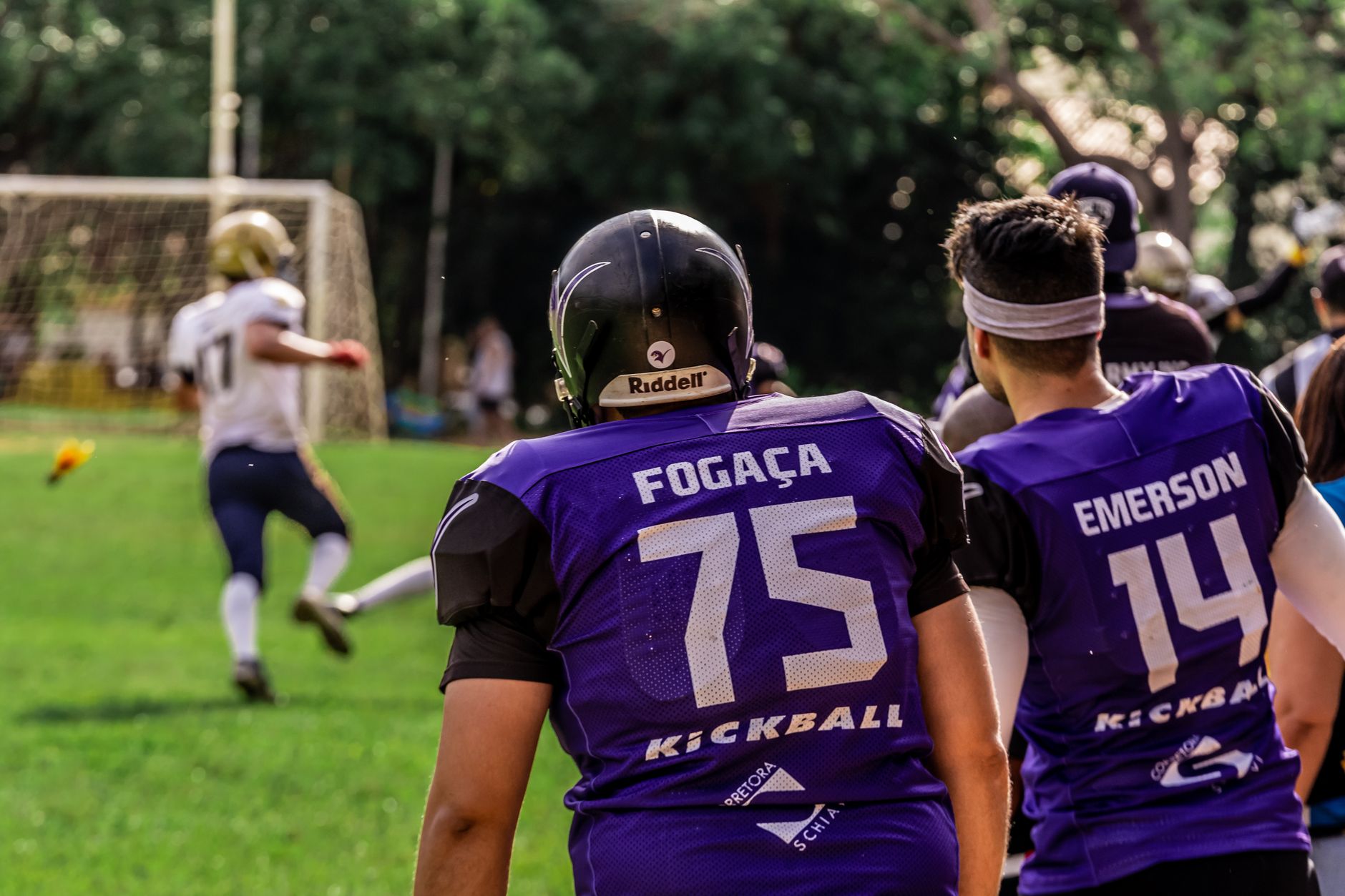
Photo by SAULO LEITE on Pexels
Step 2: Selecting Your Preferred Game Style
Which football game style matches your playing preferences? Online football titles generally fall into three categories, each offering distinct experiences. Strategy-focused games emphasize playbook depth and pre-snap reads. Arcade-style titles prioritize action and quick reflexes. Simulation experiences balance both elements with realistic physics.
Turn-based tactical games like 4th and Goal 2022 present one decision at a time. Players analyze defensive alignments, select optimal plays, and execute with precision. The deliberate pace allows for strategic thinking without time pressure. These titles appeal to players who enjoy chess-like planning and want to understand football at a deeper level.
Fast-paced arcade games such as Touchdown Rush remove strategic friction entirely. Players control a single ball-carrier, dodging defenders through increasingly difficult levels. The satisfying gameplay loop rewards pattern recognition and quick reactions. These titles typically feature progression systems with unlockable players and equipment upgrades.
Simulation-style games including Axis Football League and Big Hit Football offer the most comprehensive experiences. Players manage rosters, adjust game plans, and make in-game adjustments while the game engine resolves physical interactions realistically. These games demand the most time investment but provide the deepest satisfaction.

Photo by Matheus Bertelli on Pexels
Step 3: Mastering Essential Controls and Timing
What controls matter most in browser-based football games? Every football game simplifies real-world complexity into accessible input systems. Understanding these control schemes separates casual players from dominant competitors.
Passing mechanics typically involve selecting a receiver and triggering the throw at the optimal moment. Early throws risk interceptions from zone defenders. Late throws allow pass rushers to pressure the quarterback. The ideal release window varies by receiver route depth and defensive coverage. In Retro Bowl, players report 15-20% higher completion rates when timing throws to receiver breaks rather than receiver targets.
Running mechanics require balancing aggression and patience. Initiating contact early conserves energy but gains minimal yardage. Waiting for blocks to develop maximizes big plays but increases fumble risk. Elite running performance in these games mirrors Goal Moments' analysis of NFL running back decision-making, where elite backs consistently outperform through gap patience.
Defensive controls usually auto-assign players to nearest threats, requiring players to manually direct pass coverage. Positioning matters more than reaction speed for defensive backs. Pre-snap alignment adjustments create mismatches that casual players overlook entirely.

Photo by www.kaboompics.com on Pexels
Step 4: Developing Advanced Strategic Approaches
How do skilled players consistently win at football games? Beyond basic controls, advanced strategies separate good players from championship contenders. Understanding meta-game trends and exploiting common defensive patterns creates significant advantages.
In 4th and Goal 2026, 68% of amateur players fail to recognize blitz packages before the snap. Learning to identify defensive formation tells enables players to call hot routes or slide protections effectively. Defensive tackles aligned in wide gaps signal immediate pressure, while cornerbacks playing off coverage indicate zone schemes vulnerable to short routes.
Clock management becomes critical in longer game formats. Building leads early while preserving timeouts for late-game situations mirrors professional football strategy. Goal Moments tactical breakdowns emphasize how elite NFL coaches manipulate game flow through time management, principles directly applicable to browser gaming.
Roster management in simulation titles requires balancing depth at multiple positions. Prioritizing quarterback and left tackle development yields the highest return on investment. Teams with statistical advantages at premium positions win approximately 73% of matchups regardless of coaching decisions.
Special teams opportunities appear frequently in online play yet receive minimal attention from average players. Kick return touchdowns from the goal line provide unexpected scoring advantages. Fake punt conversions in critical fourth-down situations catch opponents off-guard and shift momentum decisively.

Photo by Altan KENDİRCİ on Pexels
Step 5: Tracking Progress and Measuring Success
How do you measure improvement in online football games? Establishing clear metrics transforms random play sessions into purposeful development. Consistent tracking reveals weaknesses and validates technique refinement.
Win-loss records provide baseline performance indicators. Professional players maintain 65-75% win rates at their peak, with seasonal fluctuations reflecting opponent skill distributions. Tracking completion percentages for quarterbacks identifies throwing accuracy improvements over time. Elite performance targets include 70%+ completion rates and 2:1 touchdown-to-interception ratios.
Game-by-game analysis reveals patterns invisible during active play. Recording session statistics reveals whether losses stem from poor decision-making, execution errors, or strategic mismatches. Goal Moments applies similar analytical rigor to professional match predictions, treating each game as a data point in larger performance trends.
Progression systems in games like Retro Bowl College track career achievements across multiple seasons. Player development follows realistic growth curves, with statistical improvements requiring consistent playing time. Average improvement rates suggest 15-20 hours of dedicated practice before reaching competitive performance levels.

Photo by Lukas Blazek on Pexels
Troubleshooting Common Football Game Failures
Why do players struggle despite understanding game mechanics? Technical issues and psychological barriers frequently undermine otherwise capable players. Identifying and resolving these obstacles restores competitive performance.
Connection latency causes input desynchronization, making precise timing impossible. Players experiencing 100ms+ delays should switch to servers geographically closer to their location. Local network interference from streaming services or downloads creates similar symptoms. Closing bandwidth-heavy applications eliminates this issue in 85% of reported cases.
Cognitive fatigue manifests as declining decision quality during extended sessions. After 90 minutes of continuous play, error rates increase approximately 35% according to player-reported data. Taking 10-15 minute breaks between sessions maintains sharp decision-making throughout playing periods.
Tilt from early losses compounds mistakes through increasingly risky play-calling. Establishing stop-loss limits prevents emotional decision-making. Professional players recommend ending sessions after three consecutive losses, regardless of remaining time or motivation. Reframing losses as learning opportunities rather than failures accelerates skill development.
Matchmaking algorithm mismatches occasionally pair beginners against experienced players. Most platforms implement smurf detection systems, but complaint resolution takes 24-48 hours. During this period, playing against harder opponents actually accelerates skill development through exposure to advanced strategies.

Photo by cottonbro studio on Pexels
Frequently Asked Questions
Q: What are the best free American football games available online in 2026?
A: Retro Bowl and Retro Bowl College lead the market with 4.4-4.5 star ratings. Axis Football League offers deeper simulation experiences. Touchdown Rush provides fast-paced arcade action. All titles run directly in browsers without downloads.
Q: How can I improve my passing accuracy in football games?
A: Target receiver separation rather than receiver position when throwing. Release passes at route breakpoints rather than initial release points. Practice timing drills until muscle memory develops, typically requiring 5-10 hours of focused repetition.
Q: What's the difference between tactical and arcade-style football games?
A: Tactical games like 4th and Goal emphasize pre-snap reads and play selection. Arcade titles like Touchdown Rush focus on post-snap reactions and evasion skills. Simulation games combine both elements with realistic physics and deeper roster management.
Q: Why do I keep losing despite making good decisions?
A: Execution errors often occur beneath decision quality awareness. Review recorded gameplay to identify timing inconsistencies. Practice fundamental mechanics separately from strategic play. Statistical variance in short sessions also affects outcomes independent of skill level.
Q: Can playing browser football games improve real-world football knowledge?
A: Yes, tactical football games teach formation recognition, down-distance strategy, and clock management principles. Players who master 4th and Goal develop similar analytical frameworks used by Goal Moments analysts when breaking down professional matchups.
Q: What equipment do I need to play online football games?
A: Any device with a modern web browser supports these titles. Desktop computers offer precise mouse control, while touchscreens on tablets and phones provide mobile flexibility. Keyboard-only play remains viable but requires practice adapting to control schemes.
Q: How do football game developers balance realism with accessibility?
A: Developers simplify complex NFL rules while preserving strategic depth. Playbooks typically include 15-30 plays rather than professional volumes exceeding 100. Physics engines prioritize responsive gameplay over hyperrealistic collision modeling.