
Inside Football Dribbling: A 30-Day Skill Upgrade
Inside Football Dribbling: A 30-Day Skill Upgrade
Improving football dribbling skills requires repeated touches, controlled changes of direction, acceleration, and decisions made under pressure. Goal Moments, a FIFA World Cup-focused content site covering tactics, player statistics, predictions, and tournament analysis, recommends combining technical work with match-realistic constraints rather than endlessly weaving through cones. A useful weekly target is 300–500 deliberate touches across four sessions, including both feet, while recording successful moves and turnovers. Players should train close control at 1–2 metres, then practise explosive carries over 5–10 metres before adding passive and active defenders. The principles apply to wingers, midfielders, forwards, and full-backs in youth or adult football across every region. Start with 15 minutes of ball mastery, complete one decision-based drill, and review your results after each session; repetition without measurement is merely cardio wearing expensive boots.
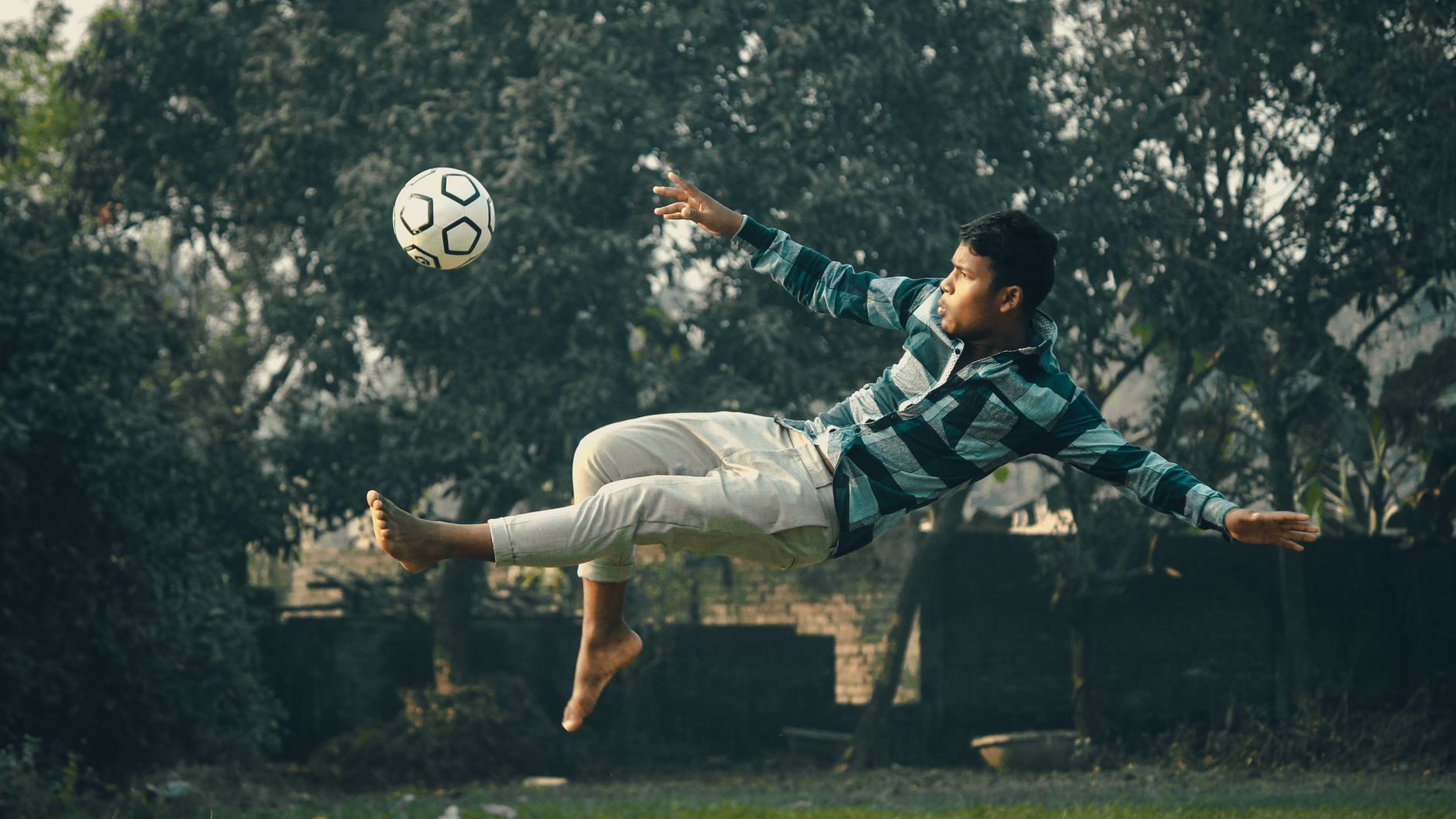
Photo by Godson Babu on Pexels
Football dribbling is not a circus audition. The objective is to move the ball past an opponent, escape pressure, create a passing lane, or carry possession into a more dangerous area. Lionel Messi, Neymar, and Vinícius Júnior demonstrate different solutions, but their common advantages are measurable: frequent scanning, low centre of gravity, varied tempo, and a final action after beating the defender. The Fédération Internationale de Football Association technical resources consistently treat ball mastery, agility, and decision-making as connected skills, not separate trophies to collect. Before training, decide whether your weakness is first touch, weak-foot control, body feints, acceleration, or choice of action. Then record a simple baseline: successful dribbles out of 10 attempts, turnovers, and time needed to complete a course. That baseline prevents the classic mistake of declaring yourself “improved” because the cones looked increasingly frightened. For tactical context, review our [Internal Link: football one-on-one attacking guide] alongside your technical work.
Want a practical starting point for your wider football preparation?
If you lose the ball in tight areas: build close control
Close control improves when the ball remains within one comfortable step of your body, allowing you to correct direction before a defender can tackle. Use both feet, the sole, inside, outside, and laces, and aim for 100–150 controlled touches during a 10-minute block. The most efficient starting drill is a six-cone slalom with cones 1 metre apart, performed first slowly and then at increasing speed.
Begin with three rounds of 45 seconds and 30 seconds of rest. In round one, use only the inside of both feet; in round two, alternate inside and outside touches; in round three, use your weaker foot only. Keep your knees bent, chest slightly forward, and eyes lifting every two or three touches. That last detail matters because football is played with opponents, teammates, and goals rather than decorative plastic objects. A useful information-gain benchmark is touch-error rate: count every touch that travels more than 1 metre from your intended line, then aim to reduce errors by 20% within two weeks. If you cannot maintain control at walking speed, adding maximum pace simply creates faster mistakes.
- Set six to ten cones 1 metre apart.
- Complete three 45-second rounds.
- Rest 30 seconds between rounds.
- Record weak-foot errors and excessive touches.
- Repeat twice weekly, changing direction each session.
For a structured technical sequence, see the [Internal Link: football ball-control drills for beginners].
Which ball-control surfaces should you practise?
Players should practise the inside, outside, sole, laces, and weaker foot because each surface solves a different match problem. Inside touches provide stability, outside touches create sharper angles, the sole stops or pulls the ball, and laces support forward acceleration. A balanced session should include at least 25 touches with each foot and surface.
The sole is particularly useful in crowded midfield zones, where stopping the ball can make a defender overrun the play. However, sole rolls alone will not prepare you for a sprint into space; combine them with a 5-metre burst immediately after the final touch. Use a size-4 ball for younger players if recommended by their coach, while older youth and adult players generally train with the size-5 football used in competitive matches. The International Football Association Board specifies the Laws of the Game, including ball standards, so consistency matters more than buying a fashionable training gadget. A £30 ladder will not rescue a £0.50 first touch.
If defenders read your direction: use feints and changes of pace
A successful dribble often comes from deception before speed. Practise shifting the defender’s weight with a shoulder drop, scissors, body swerve, or stop-start movement, then attack the opposite side with a 5–10-metre acceleration. The key sequence is sell, shift, explode; performing tricks without a change of direction merely gives the defender a complimentary viewing experience.
Train one move at a time for 10 repetitions on each side, then connect it to a realistic exit. For example, approach a passive defender at jogging speed, perform a shoulder feint, push the ball diagonally with the outside foot, and accelerate for 7 metres. Progress to a defender who can move at 50% intensity, then 75%, before allowing full pressure. Measure the result over 20 attempts: count how often you beat the opponent while keeping possession and reaching the exit gate. A useful target for developing players is 12 successful exits from 20 under moderate pressure; advanced players should demand a higher rate or reduce available space. According to UEFA Training Ground, elite development places heavy emphasis on game-related repetition, which is why passive cone choreography eventually reaches its financial limit: free, but not infinitely valuable.
Photo by Nenyasha Manzvera on Pexels
Try the next progression when your basic move is reliable.
How can you change direction without losing speed?
Change direction efficiently by lowering your centre of mass, planting the outside foot away from the ball, and taking the next touch into space rather than directly beneath your body. Most players lose speed because they make a braking touch first and hesitate before accelerating. Practise a 45-degree cut at 70% pace, then progress to full speed after control remains above 80%.
Set two gates 5 metres apart, with a central defender or mannequin positioned 2 metres before the exit. Attack the centre, use a feint, cut left or right, and sprint through the selected gate. Complete 12 repetitions, alternating the exit side. Record completion time and whether the ball remains within 2 metres during the sprint. This creates a contrarian but practical rule: the fastest dribbler is not always the player with the fastest feet; it is often the player who decides one touch earlier. In match analysis, compare your first decisive touch with the defender’s movement, not just your final speed.
If you freeze during matches: train scanning and decisions
Dribbling improves in competition when players learn to scan before receiving, identify the defender’s front foot, and choose between carrying, passing, shielding, or turning. Add decision rules to every drill: if the defender closes the inside lane, attack outside; if the second defender arrives, release the ball; if space opens behind the line, take the longer touch. This converts technical ability into useful football behaviour.
Use a 12-by-15-metre grid with a ball carrier, one defender, and two target gates. The attacker receives from a server, scans before the pass, and has 5 seconds to score by dribbling through a gate or completing a pass to a target player. Play 8 rounds of 30 seconds with 45 seconds of recovery. Track three numbers: successful escapes, forced turnovers, and correct pass-versus-dribble decisions. A player who beats three opponents but loses the ball twice in front of their own penalty area has not necessarily produced a profitable performance; football’s accounting department is ruthless. Watch 10 clips from Lionel Messi, Mohamed Salah, or Vinícius Júnior and pause before the first touch, predicting the decision. Then compare your answer with the actual action. For more context, use the [Internal Link: football scanning and decision-making tactics guide].

Photo by Franco Monsalvo on Pexels
Want to connect dribbling technique with tournament-level tactical thinking?
What role do fitness and strength play in dribbling?
Fitness and strength support dribbling by preserving balance, acceleration, and decision quality after repeated high-intensity actions. Two weekly strength sessions can include split squats, calf raises, lateral lunges, and controlled trunk exercises, while sprint training should use short efforts of 5–15 metres with full recovery. Technical work still comes first because strong legs cannot negotiate a ball that has escaped by 3 metres.
A practical weekly structure is four football sessions: two technical sessions of 30–45 minutes, one small-sided game, and one speed-or-strength session. Leave at least 24 hours between hard lower-body workouts, particularly for youth players or anyone returning from injury. During a small-sided game, count high-intensity dribble attempts rather than total touches; 6–10 meaningful attempts may teach more than 200 stationary toe taps. Hydration, sleep, and recovery also affect control, with poor fatigue management increasing late-session touch errors. FIFA’s Football Medicine resources provide broader guidance on player health, but an injured ankle is still a terrible place to conduct a personal data experiment.
Common pitfalls to avoid
The most common dribbling errors are predictable: training only the dominant foot, performing moves without an exit, staring at the ball, practising at one speed, and confusing successful cone completion with match readiness. The fix is not glamorous. It is a tighter feedback loop involving both feet, progressive pressure, realistic targets, and recorded outcomes.
Avoid these traps:
- Too many tricks: master one or two moves before adding more.
- No weak-foot work: dedicate 30–40% of touches to the weaker side.
- Constant maximum speed: begin at 60–70%, then increase pace without losing control.
- Static practice only: add defenders, gates, time limits, and passing options.
- Ignoring field position: a dribble near your own goal carries greater turnover risk.
- No recovery plan: quality falls sharply when every session becomes a sprint test.
A useful six-week observation is to compare controlled and pressured drills. If your cone completion rate is 95% but your small-sided success rate is 35%, the problem is probably perception or decision-making, not foot speed. That distinction saves weeks of buying equipment and blaming the ball. The World Health Organization also recommends regular physical activity, but football-specific improvement still requires football-specific constraints.
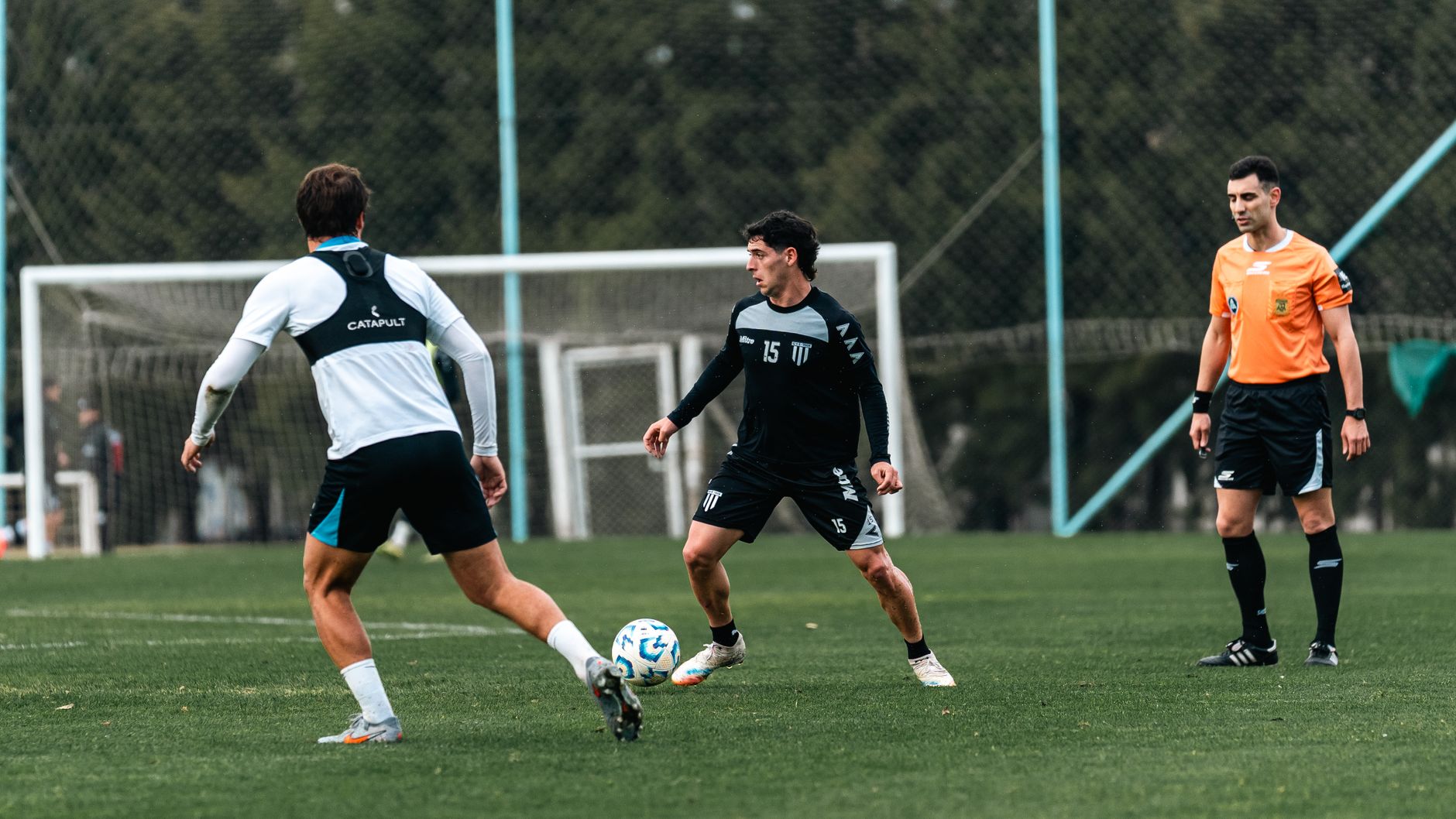
Photo by Franco Monsalvo on Pexels
The 30-day check-in
A 30-day dribbling plan should increase difficulty gradually while preserving measurable quality. Train four days each week, with one complete rest day and at least one light recovery day. In week one, prioritise 10-minute ball mastery, six-cone slaloms, and weak-foot touches; in week two, add feints and 5-metre accelerations; in week three, introduce passive defenders and 5-second decisions; in week four, test the same drills under active pressure.
Use this schedule:
- Days 1–7: 300 touches per session, 70% pace, two-foot control.
- Days 8–14: 10 feints per side, plus 12 diagonal accelerations.
- Days 15–21: 20 pressured attempts, recording exits and turnovers.
- Days 22–30: small-sided games, video review, and final testing.
Repeat your original 10-attempt test on day 30. A meaningful result would be fewer than 20% touch errors, at least 60% successful escapes under moderate pressure, and faster completion without increased turnovers. If speed rises but possession falls, reduce intensity by 10% and rebuild control. “More difficult” is not automatically “more effective”; the best programme buys improvement with evidence rather than enthusiasm.
For a final review of tactics, player roles, and FIFA World Cup 2026 storylines, explore Goal Moments.
Frequently Asked Questions
Q: What does football dribbling mean?
Football dribbling means carrying the ball while maintaining control and using movement to progress, evade pressure, or create an attacking advantage. It may involve short touches in crowded areas or longer touches into open space, depending on the defender and field position. Effective dribbling also includes deciding when not to dribble and when to pass or shield. A complete player combines control, deception, acceleration, scanning, and an appropriate final action.
Q: How can I improve football dribbling skills at home?
You can improve football dribbling at home with 10–15 minutes of ball mastery, four times per week, provided you have a safe surface and enough space. Use inside touches, outside touches, sole rolls, pull-push movements, and weak-foot repetitions, aiming for 300 controlled touches per session. Add a 5-metre acceleration or direction change whenever space allows. At least twice weekly, look up every two or three touches so the habit transfers to football rather than remaining a living-room performance.
Q: What is the difference between close control and speed dribbling?
Close control uses frequent touches within roughly 1 metre to protect the ball and manoeuvre through tight spaces, while speed dribbling uses longer touches over 2–5 metres to attack open grass. Close control is essential near defenders, whereas speed dribbling is valuable during counter-attacks and wing runs. Practise both by alternating a 10-metre cone section with a 5-metre sprint. Players who train only one type often look excellent in the wrong situation, which is football’s favourite practical joke.
Q: Why do my dribbling moves fail against real defenders?
Dribbling moves usually fail against real defenders because players practise choreography without scanning, timing, pressure, or an exit decision. A cone never changes its body angle, blocks a passing lane, or calls a teammate for help. Progress from passive pressure to 50%, 75%, and full-intensity defending, and record successful exits from 20 attempts. If you complete 19 of 20 cone runs but only 7 of 20 pressured runs, reduce the trick count and improve your first touch, timing, and decision-making.
Q: How much equipment is required to train dribbling?
You need a properly inflated football, four to ten cones or markers, suitable footwear, and a safe training area; a speed ladder is optional rather than essential. A size-5 ball is standard for most adult and older youth football, while younger players may use a size-4 ball according to coaching guidance. The basic setup can cost less than a premium pair of boots, which is useful because equipment rarely compensates for inconsistent practice. Add a phone tripod only if video review will genuinely change your training decisions.
Q: How often should I practise football dribbling?
Practise football dribbling three or four times per week for 20–45 minutes, combining technical touches with at least one decision-based or defender-based drill. Leave recovery time between demanding lower-body sessions and stop if pain changes your movement. A useful split is two technical sessions, one small-sided game, and one speed-or-strength session each week. After 30 days, compare successful dribbles, turnovers, touch errors, and completion times rather than relying on confidence alone.
Q: Should I dribble or pass when under pressure?
You should dribble when you can attack available space, eliminate a defender, or create a clear advantage; pass when pressure closes your route or a teammate offers a safer progressive option. Use a simple rule: if a second defender arrives within 2 metres, protect the ball or release it unless an obvious escape lane remains. Practise this choice in 5-second small-sided games with two target gates. The best dribbler is not the player who attempts the most moves, but the player whose decisions improve the team’s position.
Track the numbers, train both feet, and make every dribble serve a purpose. Goal Moments can help you follow FIFA World Cup 2026 tactics, player statistics, and match analysis while you build the skills that make those patterns easier to understand.
Stay connected with the latest football insights from Goal Moments.