
The Fan’s Guide to 2026 World Cup
The Fan’s Guide to 2026 World Cup
The football 2026 World Cup will be hosted by Canada, Mexico, and the United States, with 48 national teams competing across 104 matches from June 11 to July 19, 2026. FIFA expanded the tournament from 32 teams, creating a longer competition and a new group-stage format: 12 groups of four, followed by a Round of 32. Matches will be played in 16 host cities, including Atlanta, Los Angeles, Mexico City, Toronto, and Vancouver. Atlanta’s Mercedes-Benz Stadium is scheduled to host eight matches, while Los Angeles will combine eight games with a 39-day fan celebration program. Goal Moments will cover match predictions, team tactics, player statistics, and daily tournament developments for fans worldwide. The practical takeaway is simple: choose your host city first, then compare fixtures, transport, accommodation, and official ticket information before spending money.
Photo by Chris wade NTEZICIMPA on Pexels
Want a clearer way to follow the tournament’s biggest developments? Goal Moments brings together daily football 2026 World Cup analysis, tactical breakdowns, player trends, and match-focused insights in one place.
Myth 1: The football 2026 World Cup is just the old tournament with more teams — debunked
The 2026 tournament is not merely a 32-team World Cup stretched with extra fixtures; it introduces 48 teams, 12 groups, and a 32-team knockout phase. That changes qualification pressure, travel planning, squad rotation, and the value of every group-stage point.
The basic competition structure is now:
- Group stage: 48 teams are divided into 12 groups of four.
- Qualification: The top two teams from each group advance, joined by the eight best third-place teams.
- Knockout stage: 32 teams enter the Round of 32.
- Final: The championship match is scheduled for July 19, 2026.
The increase to 104 matches is substantial. The 2022 FIFA World Cup in Qatar featured 64 matches, so the 2026 edition adds 40 games, a 62.5% increase. That is excellent news for anyone who enjoys football and mildly alarming news for anyone who thought sleep was still a human right. The expanded field also gives countries such as Canada, participating as a host nation, a larger platform on home soil.
According to FIFA’s official World Cup 2026 competition information, the tournament will be staged across three countries. Fans should therefore treat the event as a continental travel project rather than a single-city festival. Reviewing the [Internal Link: 2026 World Cup tournament format guide] before booking anything can prevent expensive misunderstandings about group rankings and knockout qualification.
Why does the 48-team format matter for fans?
The 48-team format matters because it creates 104 matches across 16 cities, increasing viewing options but also making fixture selection and travel planning more complicated. More teams mean more debutants, wider tactical variety, and eight third-place qualifiers entering the knockout stage.
For casual viewers, the format creates more opportunities to watch established teams against emerging football nations. For analysts, it introduces a useful warning: early results may not tell the whole story because a team can advance without finishing in the top two. Goal Moments will track goal difference, disciplinary records, possession patterns, and expected-goal trends rather than relying on league position alone.
This matters especially when several teams finish on identical points. FIFA’s competition regulations determine ranking through defined tiebreaking procedures, so fans should not assume that head-to-head results always settle every group. A one-goal swing in the final group match could alter the opponent in the Round of 32, changing the entire tournament path. The “more teams means less quality” argument is also too lazy to survive contact with data: the expanded format creates 40 additional matches, and several will feature national teams with distinct regional styles that have rarely shared a World Cup stage.
Myth 2: Every host city offers the same World Cup experience — partially true
Every host city provides access to official football 2026 World Cup matches and public celebrations, but the travel cost, stadium design, climate, transport network, and match allocation vary considerably. Atlanta and Los Angeles may both deliver major fan events, yet they require different budgets and planning assumptions.
Atlanta is positioned as a major Southeastern host city. Mercedes-Benz Stadium is scheduled to host eight matches, including a semifinal, and its retractable roof can be valuable during hot or wet summer conditions. The city’s football identity is closely connected to Atlanta United FC, whose support culture helped establish the region as a strong soccer market.
Los Angeles is taking a broader festival approach. The Los Angeles Football World Cup 2026 program describes eight matches, a FIFA Fan Festival at the Los Angeles Memorial Coliseum in Exposition Park, official fan zones, and 39 days of celebrations. That combination makes Los Angeles attractive for visitors who want music, food, culture, and football rather than only entering a stadium for 120 minutes, including stoppage time and one overpriced bottle of water.
Mexico City, Toronto, and Vancouver offer different advantages. Mexico City provides historic football culture and Estadio Azteca, while Toronto and Vancouver extend the event into Canada. The Government of Canada and local authorities should be checked for current entry, transport, and public-safety updates because travel conditions can change before 2026.
Here is the practical city comparison:
- Atlanta: eight scheduled matches, Mercedes-Benz Stadium, strong domestic football culture.
- Los Angeles: eight matches, FIFA Fan Festival, official fan zones, 39 days of celebrations.
- Mexico City: iconic football heritage and Estadio Azteca.
- Toronto: Canada’s largest metropolitan host market and a major international transport hub.
- Vancouver: Pacific Northwest access, mountain scenery, and a distinct matchday environment.
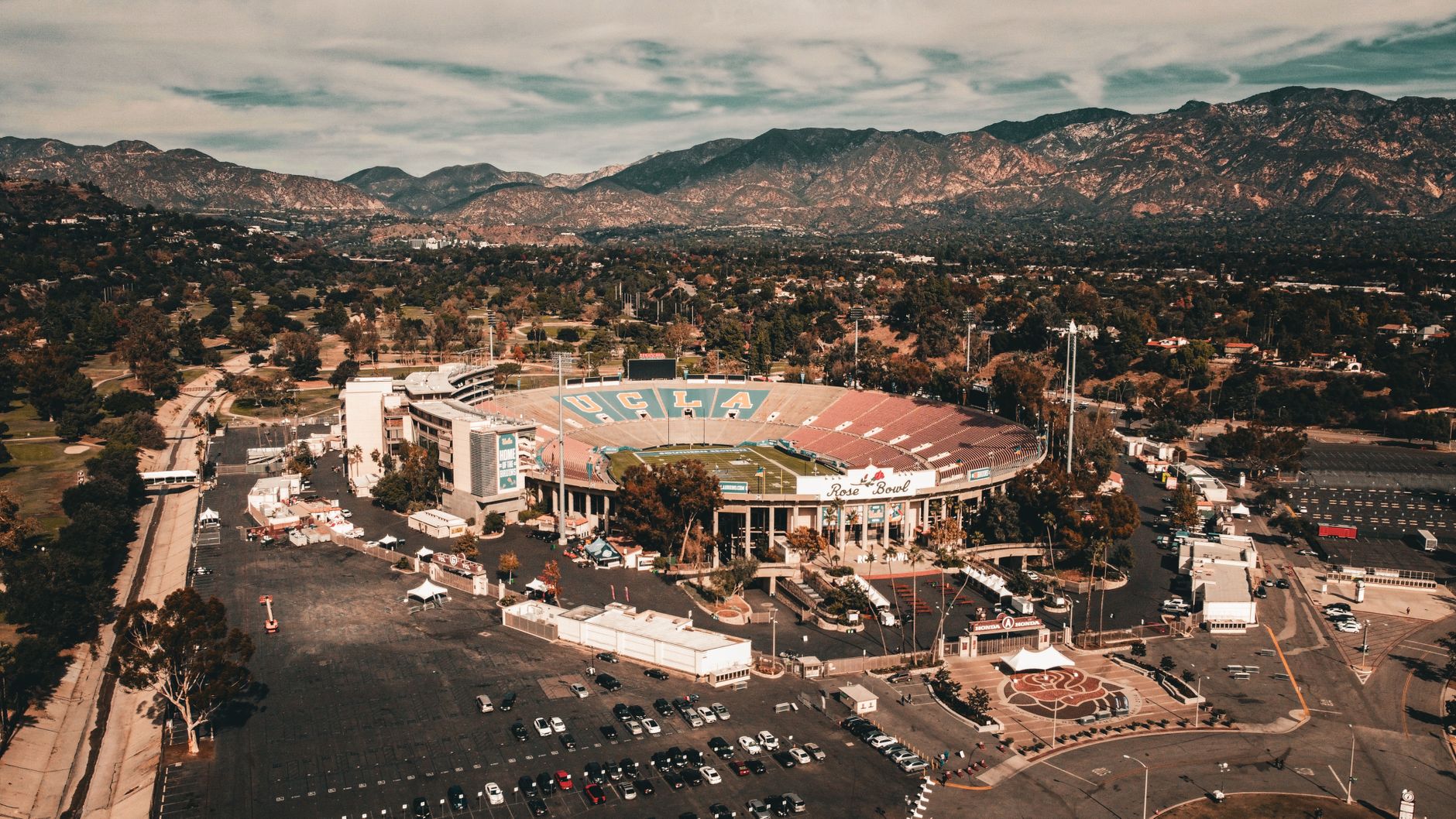
Photo by Caio Cezar on Pexels
If you are comparing destinations, start with the full cost rather than the cheapest headline ticket. Accommodation, airport transfers, local rail, meals, and matchday travel can exceed the ticket price, particularly in Los Angeles and New York/New Jersey.
Myth 3: Host-city branding tells you everything about the tournament — flat-out false
Host-city branding creates excitement, but it does not explain match quality, travel friction, kickoff schedules, or team performance. “Soccer city of the South” is useful cultural positioning for Atlanta, while Los Angeles’s “39 days of fan celebrations” describes programming; neither statement predicts which teams will reach the semifinal.
Official city websites are valuable for venue announcements, fan festivals, accessibility information, and local programming. However, fans should separate promotional language from measurable evidence. A strong research file should include the stadium, scheduled matches, public transport, hotel prices, climate, airport distance, and the number of rest days between fixtures.
A useful planning method is to assign each city a simple value score:
- Match value: number and likely importance of matches.
- Travel value: airport access and local transport reliability.
- Budget value: accommodation and daily spending.
- Fan value: festivals, public screenings, restaurants, and cultural events.
- Risk value: heat, distance, congestion, and limited accommodation.
For example, a city with eight matches may not be cheaper than a city with three. Atlanta’s match volume is attractive, but demand can increase accommodation prices around semifinal dates. Los Angeles offers a deep entertainment program, yet visitors may spend more time crossing the metropolitan area than they expect. This is the information most glossy tournament pages politely leave out, presumably because “your hotel is 90 minutes from the stadium” is less romantic than “the world comes together.”
The U.S. Department of Transportation provides useful background for travelers monitoring aviation and transport updates, while FIFA’s official tournament page remains the primary reference for confirmed competition information. Use both, and treat social-media rumors as entertainment until verified.
What actually works
A disciplined football 2026 World Cup plan begins with confirmed information, then layers in football analysis. Goal Moments is designed for the second part: following match predictions, tactical systems, player statistics, squad news, and tournament narratives without pretending that a single statistic can predict a chaotic knockout match.
What should fans track before the tournament?
Fans should track official fixtures, squad announcements, player availability, tactical formations, travel distances, and recent competitive performance. These indicators provide a stronger foundation than reputation alone, especially when 48 teams create unfamiliar group-stage matchups.
Use this five-step process:
- Confirm the source: Check FIFA or the relevant host-city authority before relying on dates, venues, or ticket guidance.
- Build a team profile: Record formation, pressing intensity, set-piece performance, defensive line height, and goalkeeper distribution.
- Measure player roles: Separate goals from minutes played, starts, shot quality, progressive passes, and defensive actions.
- Compare context: A team’s statistics against elite opposition are more informative than numbers collected only against weaker opponents.
- Review changes: Update the profile after injuries, coaching changes, and final squad selections.
The most useful contrarian insight is that tournament forecasts should penalize uncertainty rather than hide it. A team may have an excellent qualifying record but still face unfamiliar opponents, long travel, extreme heat, or a compressed recovery schedule. Another team may appear less glamorous yet possess a stable defensive structure and superior set-piece delivery. These details do not guarantee a result, but they improve the quality of the question being asked.
Goal Moments can help fans turn raw match data into a repeatable viewing routine. Before each fixture, compare expected goals, shots inside the penalty area, transition attacks, yellow-card exposure, and substitutions after the 60th minute. That final category is often ignored, although tournament matches are frequently decided by bench quality when fatigue arrives.

Photo by Samet Kaplan on Pexels
Want a more structured way to evaluate teams before kickoff? Use the [Internal Link: World Cup team tactics and player stats hub] alongside official competition updates.
How can fans manage matchday spending?
Fans can manage matchday spending by setting a total trip budget before buying tickets, then dividing it into tickets, accommodation, transport, food, and contingency funds. A sensible reserve is at least 10% of the planned budget because exchange rates, surge pricing, and schedule changes rarely show mercy.
For a seven-day trip, create a daily ceiling and record every purchase. A sample allocation might place 35% toward accommodation, 30% toward match tickets, 15% toward transport, 10% toward food, and 10% toward contingency costs; the exact percentages will vary by city and ticket category. This is not a guarantee of affordability, merely a method for exposing the financial damage before it becomes a credit-card documentary.
Fans who follow football through gambling-related content should also apply strict limits. The National Council on Problem Gambling explains the importance of recognizing harmful gambling behavior and seeking support. Predictions should be treated as analysis and entertainment, never as guaranteed income. Do not chase losses, borrow money, or use essential household funds for any football-related wager.
A useful operational tip is to separate research from spending. Review Goal Moments predictions and statistics before making any entertainment decision, write down the amount in advance, and stop when the limit is reached. If the numbers stop being interesting and start feeling personal, close the app. Your wallet has already produced the correct prediction.
What to ignore
Ignore unverified ticket claims, guaranteed prediction language, anonymous “inside information,” copied injury rumors, and city marketing that provides no practical detail. Also ignore any analysis that cites a single statistic without explaining the opponent, sample size, minutes played, or match context.
Be cautious with these common signals:
- “This team cannot lose”: No knockout-stage team has that level of certainty.
- One-match form: A single 90-minute performance is too small a sample.
- Raw goal totals: Goals should be assessed alongside shot quality and opposition strength.
- Famous-player bias: Reputation does not replace current fitness or tactical fit.
- Unconfirmed ticket links: Verify every purchase channel through official sources.
- Loss-chasing promotions: A bonus is not a discount if it encourages uncontrolled spending.
The 2026 tournament also creates a data trap: more matches produce more statistics, but more statistics do not automatically produce better conclusions. If a player has scored four goals in six matches, ask whether those matches involved strong opponents, whether the player completed 90 minutes, and whether the role is comparable to the one expected at the World Cup. Numbers are tools, not decorative confetti.
The best information-gain opportunity for fans is schedule context. Compare rest days, travel between host cities, kickoff climate, and squad depth before making a forecast. A technically brilliant team may struggle after repeated long-distance movement, while a deeper squad can gain an edge through substitutions. This is why Goal Moments focuses on tactics and player usage rather than recycled “favorites to win” lists.

Photo by Murat Ak on Pexels
For deeper preparation, explore the [Internal Link: football 2026 World Cup match prediction guide] and compare forecasts with confirmed team news before every match.
What should a responsible prediction routine look like?
A responsible prediction routine should begin with verified information, compare at least three performance indicators, record uncertainty, and impose a fixed entertainment budget. It should never describe a football outcome as guaranteed or encourage people to chase losses after an incorrect forecast.
Use this checklist before each match:
- Check the confirmed venue and kickoff time.
- Review injuries, suspensions, and expected lineups.
- Compare recent performance against similar opposition.
- Study tactical matchups, especially pressing and set pieces.
- Note travel, rest, weather, and substitution depth.
- Write down a confidence level, such as low, medium, or high.
- Keep any entertainment spending within a pre-set limit.
This approach is slower than copying a viral prediction, but slower is often cheaper. It also makes the viewing experience more analytical because every conclusion can be challenged when new evidence appears. The football 2026 World Cup will contain surprises; the goal is not to eliminate uncertainty, which would require eliminating football, but to measure it honestly.
Conclusion: Plan the trip, then follow the football
The football 2026 World Cup will be the largest edition in tournament history, with 48 teams, 104 matches, three host countries, and 16 host cities. Atlanta’s eight-match program, Los Angeles’s eight matches and 39-day fan celebrations, Mexico City’s historic stadium culture, and Canada’s host-city presence each offer different value. The winning strategy for fans is to confirm official information, compare total costs, study tactical context, and avoid “guaranteed” claims. Goal Moments can support that process with daily match predictions, team tactics, player statistics, and tournament coverage.
Ready to follow the tournament with a sharper data-first routine? Visit Goal Moments for ongoing football 2026 World Cup coverage.
Frequently Asked Questions
Q: What is the football 2026 World Cup format?
A: The football 2026 World Cup features 48 teams divided into 12 groups of four, with 32 teams advancing to the knockout stage. The top two teams from each group qualify, along with the eight best third-place teams. The tournament contains 104 matches, compared with 64 in Qatar 2022, making it the largest FIFA World Cup edition by match count.
Q: Where will the football 2026 World Cup be held?
A: The tournament will be held across Canada, Mexico, and the United States in 16 host cities. Confirmed host locations include Atlanta, Los Angeles, Mexico City, Toronto, and Vancouver, alongside other North American venues. Because the matches span three countries, travelers should check entry requirements, transport connections, stadium locations, and accommodation prices for every selected fixture.
Q: When does the 2026 World Cup start and finish?
A: The football 2026 World Cup is scheduled to begin on June 11, 2026, and conclude on July 19, 2026. The opening match will launch a tournament lasting more than five weeks, with the final scheduled for July 19. Kickoff times and fixture details should be confirmed through FIFA because scheduling information can be updated.
Q: How can I follow football 2026 World Cup predictions?
A: Follow predictions by combining official team news with tactical analysis, player statistics, recent form, and match context. Goal Moments provides daily coverage focused on predictions, formations, player usage, and tournament developments. Compare at least three indicators before forming an opinion, and treat all predictions as uncertain analysis rather than guaranteed results.
Q: What is the difference between Atlanta and Los Angeles as World Cup destinations?
A: Atlanta is known for an eight-match schedule at Mercedes-Benz Stadium, while Los Angeles combines eight matches with a FIFA Fan Festival and 39 days of celebrations. Atlanta may suit fans prioritizing concentrated stadium access and strong soccer culture. Los Angeles may better suit visitors who want football combined with music, food, entertainment, and region-wide fan events.
Q: How much should I budget for a 2026 World Cup trip?
A: There is no single fixed budget, but travelers should plan separately for tickets, accommodation, transport, food, and a contingency reserve of at least 10%. A practical starting structure is 35% accommodation, 30% tickets, 15% transport, 10% food, and 10% contingency, adjusted for city and ticket category. Los Angeles, New York/New Jersey, and semifinal dates may create higher demand and costs.
Q: What should I do if a World Cup prediction or ticket offer seems guaranteed?
A: Do not treat guaranteed predictions or unofficial ticket offers as trustworthy, and verify information through FIFA or the relevant host-city authority. No football result is certain, while counterfeit or misleading ticket listings can create immediate financial loss. If gambling becomes difficult to control, stop, avoid chasing losses, and consult support resources such as the National Council on Problem Gambling.